
Electric utilities around the world are increasingly concerned about a concept known as the Utility Death Spiral. When an increasing number of customers no longer rely on a utility company and partially or fully disconnect from the grid, costs of operation increase proportionally. There comes a point when the utility can no longer cover their rising costs of operations, such as infrastructure maintenance, employee costs, etc. Costs increase again, driving more customers off-grid; the result is the Utility Death Spiral.
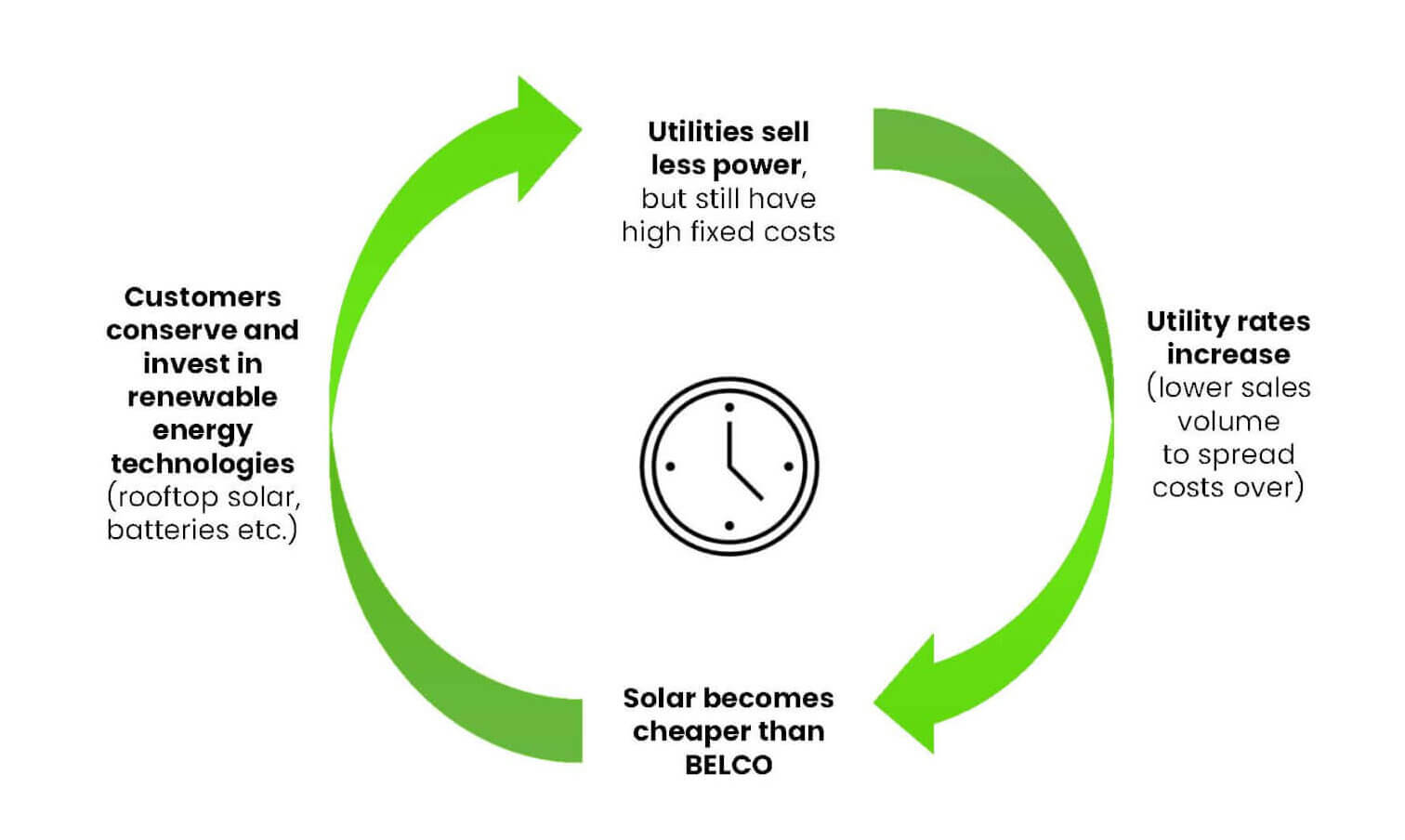
Increases in renewable installations on homes and businesses can hasten the Utility Death Spiral. The increase in renewables reduces kilowatt-hour sales and decreases the customer base that shares a utility’s fixed costs. As a result, the price of electricity climbs. As prices increase, more customers make the leap to invest in distributed renewable energy systems. Sales and the customer base further reduce while costs continue to increase. The spiral continues until eventually the utility has no choice but to cease operations. The utility death spiral is a theoretical concept that we and many other utilities are aiming to avoid.
Grid Parity

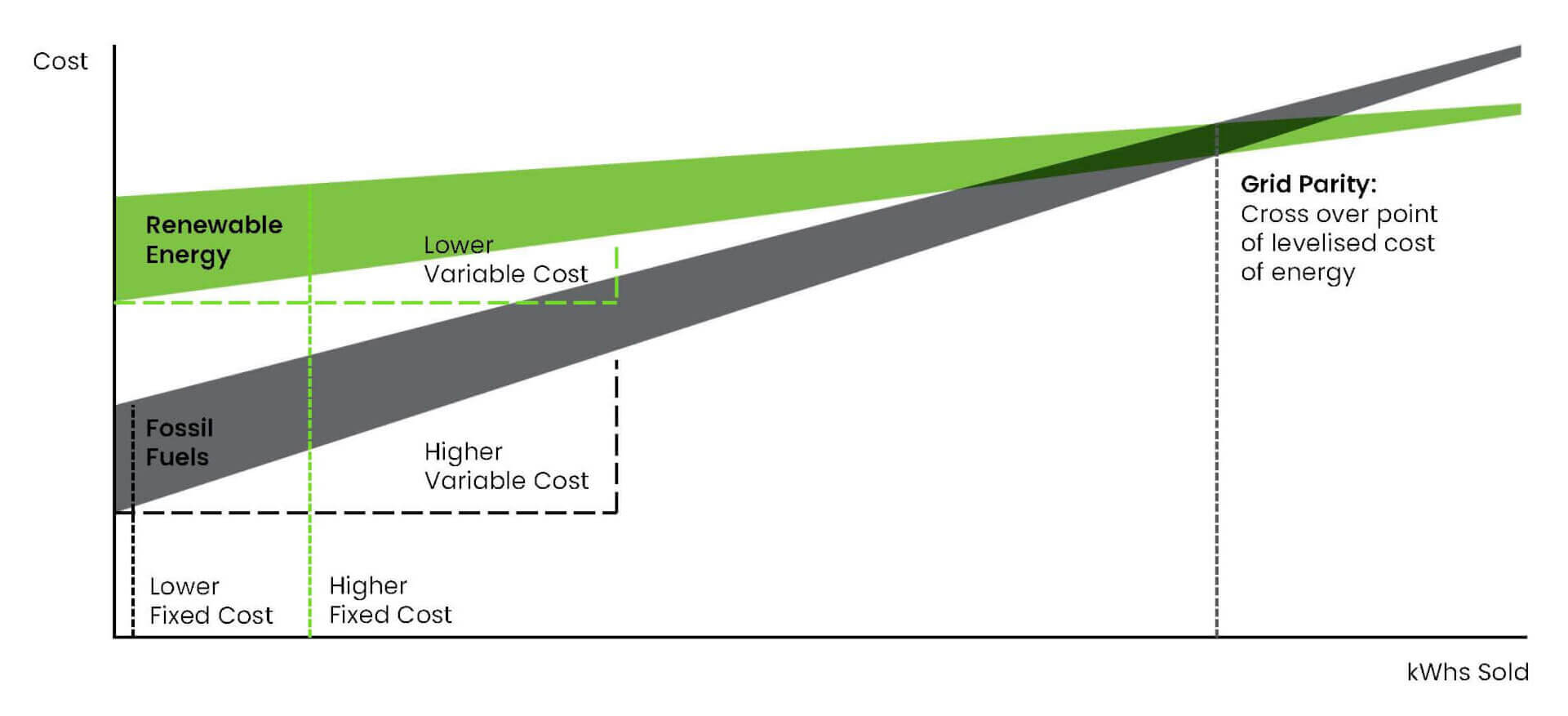
While utility costs are spiraling up, the cost of small-scale renewable generation is falling. At some point, when the two spirals cross, we hit the point of grid parity. When grid parity is reached, electricity consumers have an economic incentive to generate their own renewable power on-site rather than simply buying electricity from their utility company’s grid.
In the future, Bermuda will reach grid parity and BELCO needs to prepare for that eventuality. While our entire customer base will not install solar overnight, many of our customers who can afford it have already done so. As costs come down, others will start to consider installing renewables and that is when the utility death spiral hastens.
Utility Challenge
BELCO’s primary objective is to provide safe, reliable power, and the current challenge is to balance renewable energy sources and dispatchable fossil fuels. Utilities such as BELCO typically change course slowly and rely on proven technology, for good reason. Adapting to changing demands requires innovation, which involves risk. However, not being innovative is far riskier in the long run. The consequence of carrying on with business as usual is that BELCO falls into a downward spiral as costs escalate out of control.
Customer Segments
When examining the utility death spiral, there are four groups of customers that can be identified with varying impacts and consequences. Each customer group’s reality and goals must be considered when looking at the way forward, even when their realities and goals may differ.
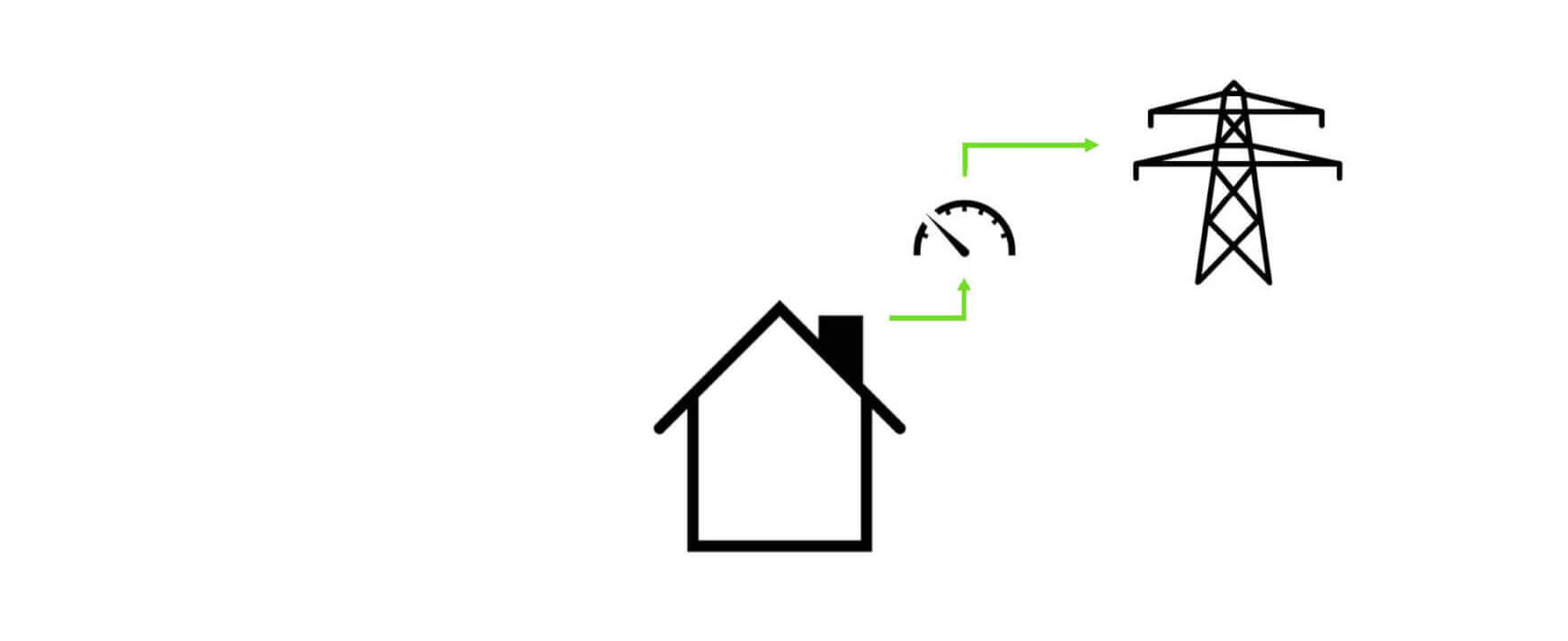
The first group are customers connected to the grid that have no alternative source of energy and rely on the grid to supply all their electricity. This group includes homeowners who can’t afford to install solar generation or those who live in rented accommodation.
Group 1 Utility Reliance: This group relies on BELCO for electricity all the time.
Group 1 Identifier: This group has the highest bills relative to their income.
Group 1 Goal: This group wants cheaper electricity.
At BELCO, our goal is to do everything we can to adjust the charging structure so fixed costs are matched with fixed pricing and spread the costs to relieve financial pressure on this group.
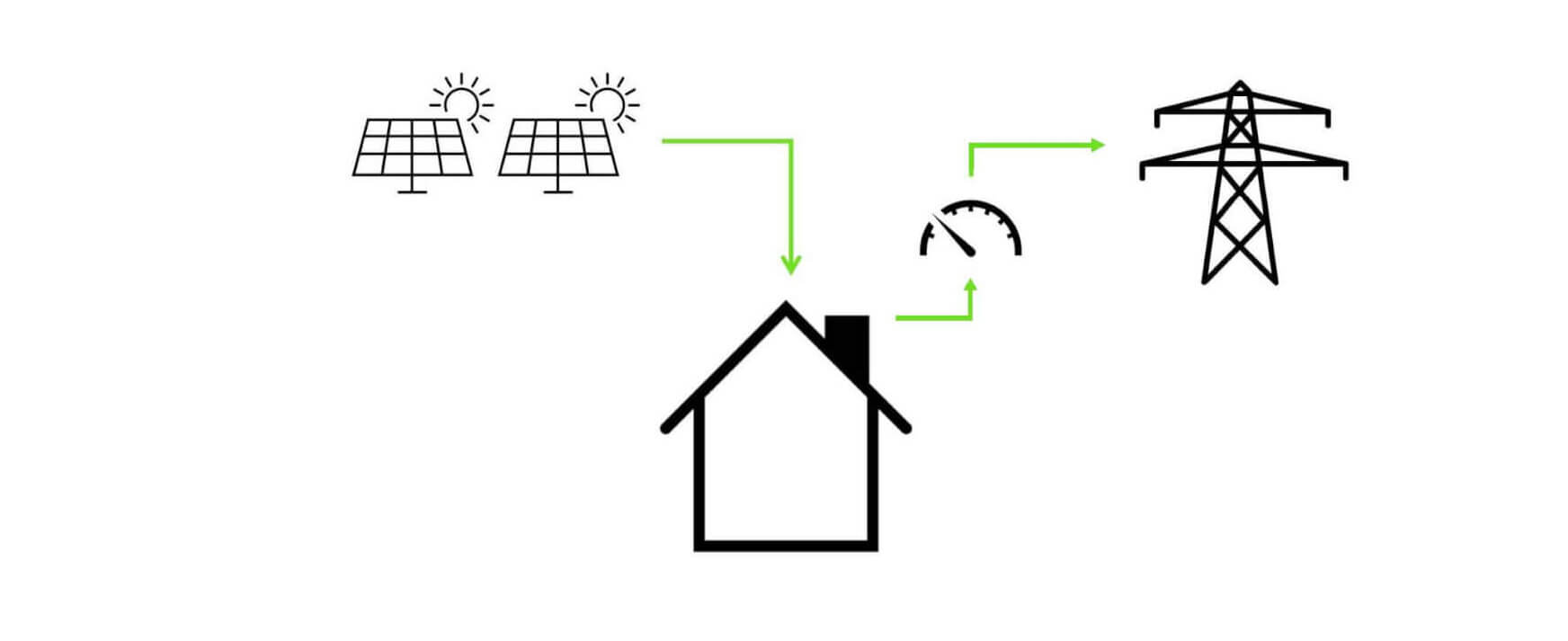
The second group primarily includes homeowners that have invested in renewable energy sources, are generating partial amounts of their electricity demand but typically are not net exporters.
Group 2 Utility Reliance: This group relies on BELCO through the hours of darkness.
Group 2 Identifier: This group is likely to have low energy bills.
Group 2 Goal: This group wants renewable sources and cheaper electricity.
BELCO seeks to work with the Regulatory Authority for a fair feed in tariff that does not overcompensate net exporters. The grid must be lower carbon and lower cost to win their favour.
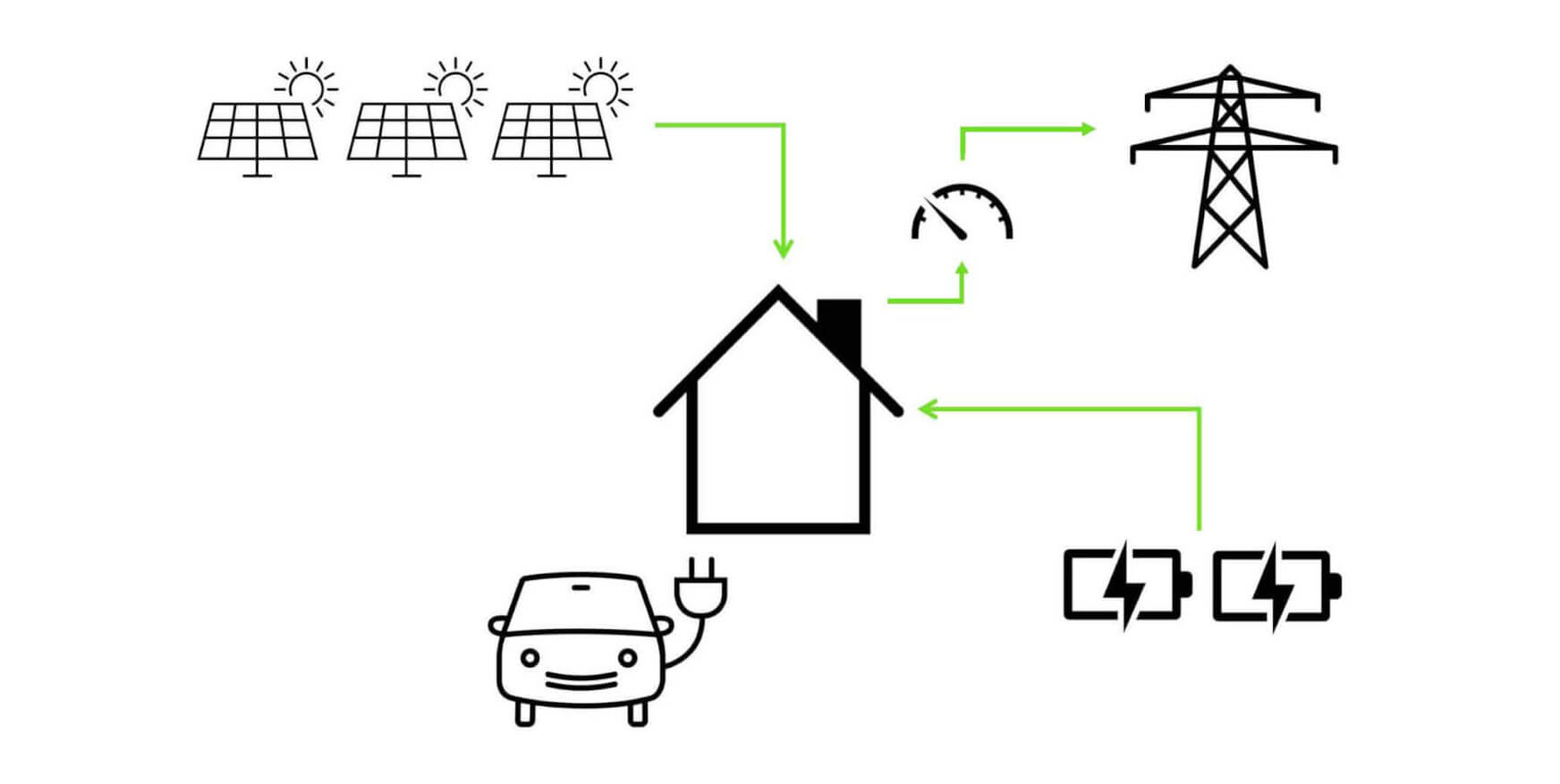
The third group are still connected to the grid but are very close to or are already self-sufficient.
Group 3 Utility Reliance: This group has some battery energy storage and are less dependent on the grid, but still stay connected for back-up energy security.
Group 3 Identifier: This group is likely to have very low energy bills or receive a payment for the energy exported.
Group 3 Goal: This group wants renewable sources all the time and a return on their investment.
BELCO aims to offer a solution to these customers that prevents them from defecting from the grid. They need reliability and security from a grid that costs less than additional investment in storage solutions.
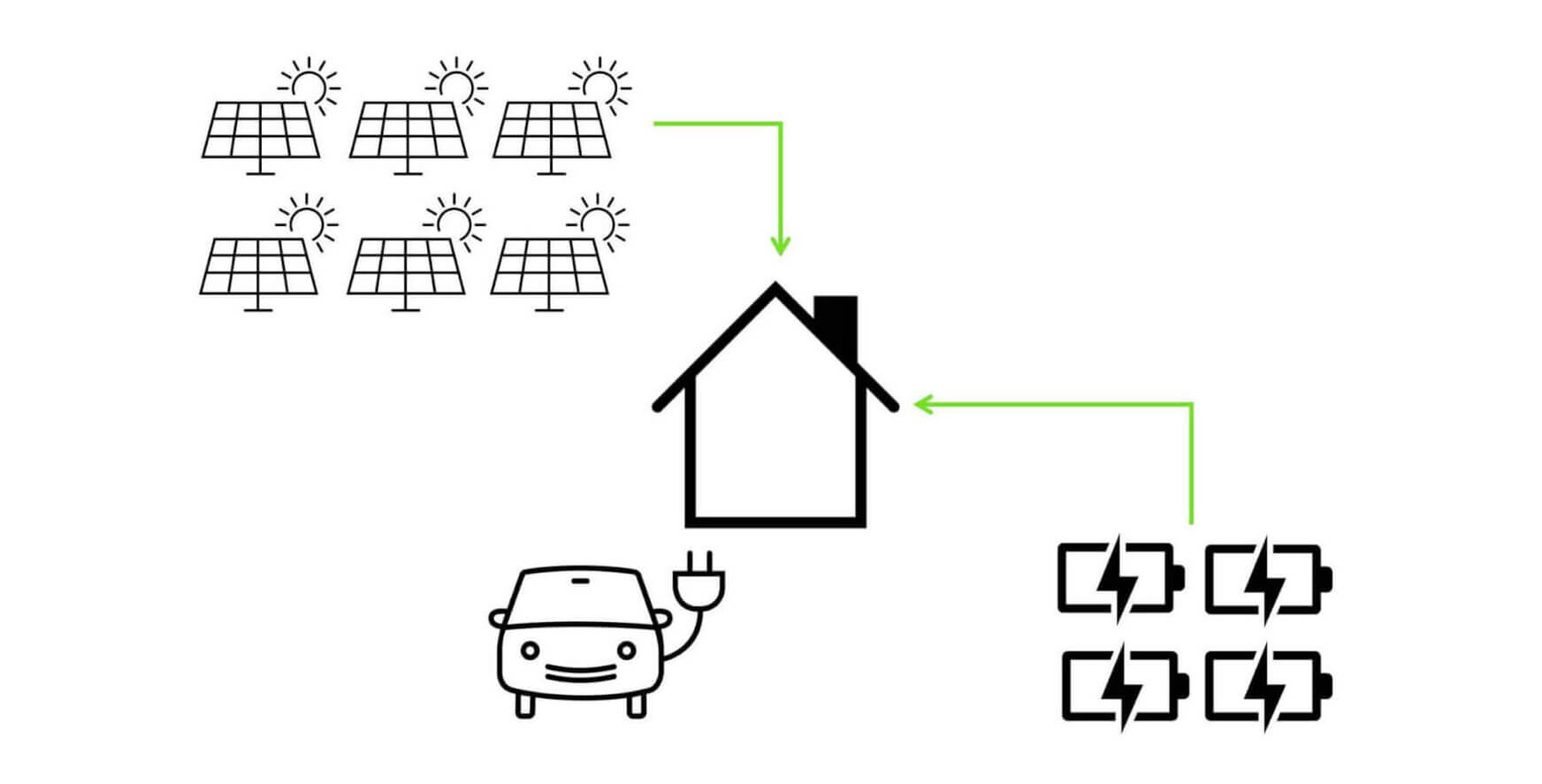
The fourth group have already defected from the grid and have excess solar generation combined with ample storage to survive off grid. They will have adapted their energy consumption behaviours and invested heavily in the system.
Group 4 Utility Reliance: This group does not rely on BELCO.
Group 4 Identifier: This group does not have an energy bill.
Group 4 Goal: This group wants renewable sources all the time and to be self-reliant.
We need to ensure that reconnecting to the grid can be done at a fair cost and is attractive. Whilst Bermuda does not have many residents in this group currently, we expect that this group will increase in size on our way to grid parity.
What pushes one group pulls on another and BELCO is focused on data-driven solutions with balance being the key. To find that balance, we must learn from experience and data. A data-driven strategy is critical to navigating a course out of the utility death spiral. BELCO is leveraging the data that we have already generated and setting up new data collection streams and infrastructure to store and analyse what we gather.
BELCO’s Response to avoid the utility death spiral.
So, how are we going to rise from the spiral, ensuring that we keep our customer base connected to the grid? Everybody wants cheaper electricity. Most people want green electricity. And almost everyone wants electricity all the time. By understanding the customer response, fair and true cost representations will come from numerous datasets linked together with forecast modelling of consumer behaviour.
We can restructure costs, but BELCO cannot become an expensive provider that only operates some of the time despite being available all the time. We are working with the Regulatory Authority to develop a cost structure that ensures energy and the connection to the grid is appropriately costed. Feed in tariffs promote renewable penetration, but the cost of our island grid is no longer shared by all customers. Those without distributed renewables are covering more than their fair share of the fixed assets to deliver energy island wide.
Some economists have suggested that fixed costs have fixed prices. If you are connected to the grid at all you have a fixed fee for the connection. The variable cost is then more representative of the variable cost of electricity generation. BELCO and the Regulatory Authority must collaborate to make sure the distributed energy systems across the island and connected to the grid are paid for fairly in a method which allows everyone to have a lower cost of electricity supply.
In order to meet green energy demands, we are researching locally appropriate opportunities for offshore wind farms and wave energy farms as well as applying storage technology models to understand how to store and redispatch energy from the middle of the day to the evening peak, or even from one season to another. Data networks alongside our transmission and distribution networks, agile storage and state-of-the-art protection systems are all required to adapt to intermittent energy sources. However, regulation and prudency checks at each step of the way limit the scope of risk that a utility can take to find the solution in emerging technologies.
Bermuda wants reliable, low-cost electricity 24/7 that leverages its natural resources all without sacrificing security of supply. Our drive towards sustainability demands a reduction in the cost of electricity and a reduction in greenhouse gas emissions. We want to invest in renewables, which will also require the development and implementation of a smart grid and storage solutions of the future.
This will ensure that customers without their own renewable energy systems have access to affordable, clean energy. We’re looking at more equitable cost structures while researching time dependent electricity cost models in addition to educating customers on energy conservation behaviours. We also invest in empowering young Bermudians to build their skill sets in renewable energy, power systems, finance and engineering to help us develop solutions.
Our strategy to pull out of the utility death spiral is data driven and locally appropriate. Avoiding the spiral requires us to adjust our vision and pull the levers at our disposal to create the conditions for an upward spiral. By all stakeholders working together, we can ensure safe, reliable, affordable and sustainable energy for all of Bermuda.