
For over 115 years Bermuda Electric Light Company Limited (BELCO) has supplied electricity to the people and businesses of Bermuda. From humble origins at the Company’s plant on East Broadway serving a handful of customers, BELCO now serves approximately 36,000 customers from the Company’s power plant on Serpentine Road and maintains an island-wide transmission and distribution network.
BELCO currently holds two operating licenses issued by the Bermuda Regulatory Authority (RA), a Bulk Generation (BG) license and a Transmission, Distribution and Retail (TD&R) license.
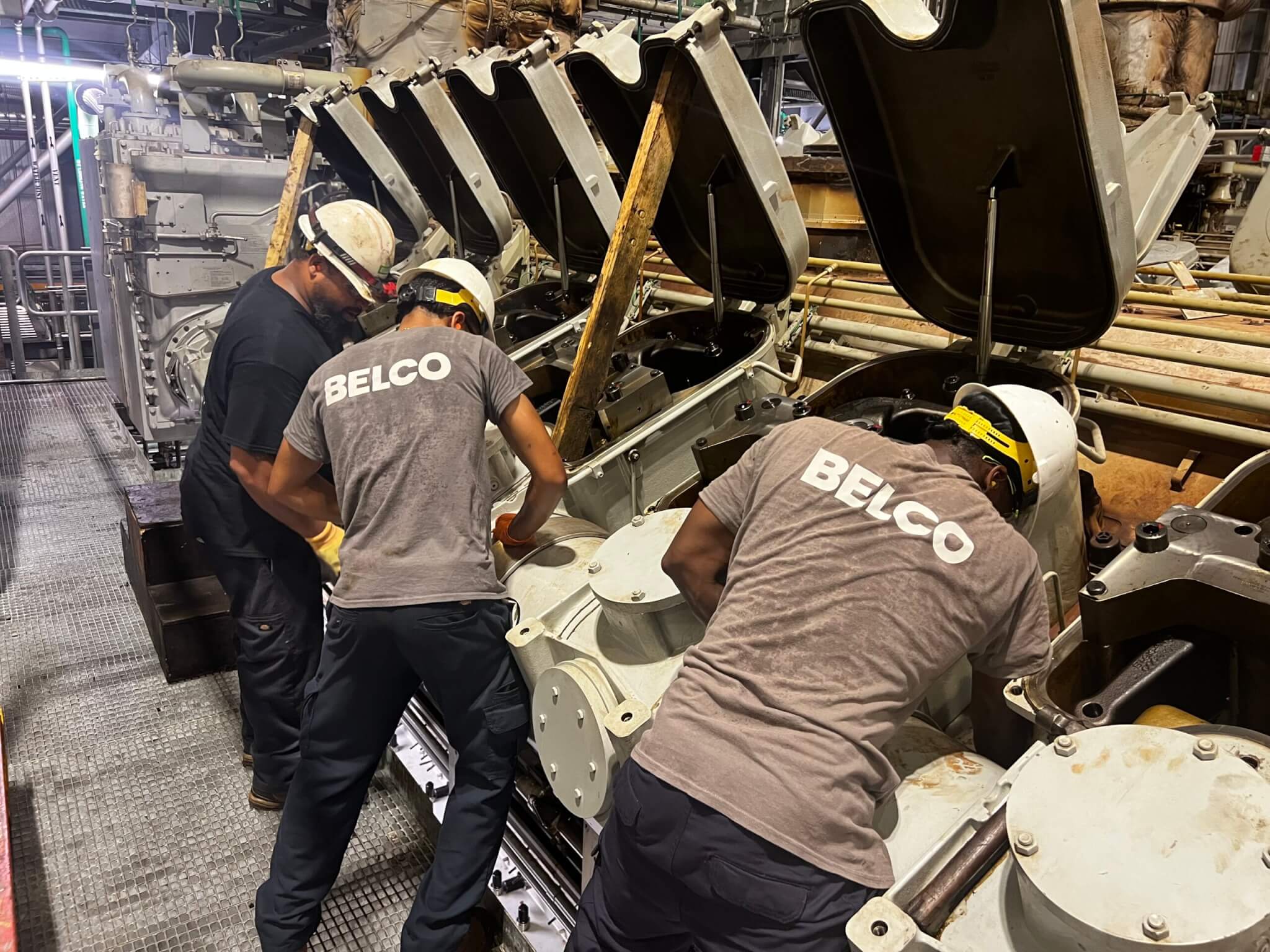
The BG license is for the power plant, which operates several engines running on fuel oil and diesel to generate power. BELCO has a total of 12 engines available with total power generation of approximately 145 megawatts (MW).
Electricity is produced when a turbine generator set converts chemical energy to mechanical energy to electrical energy. BELCO uses fuel oil to drive diesel engines, or gas turbines which in turn moves the rotor of an alternator. In the cases of wind power and hydropower, turbine blades are moved directly by flowing wind and water, respectively. Solar photovoltaic panels convert the radiant energy of sunlight directly to electricity using semiconductors.
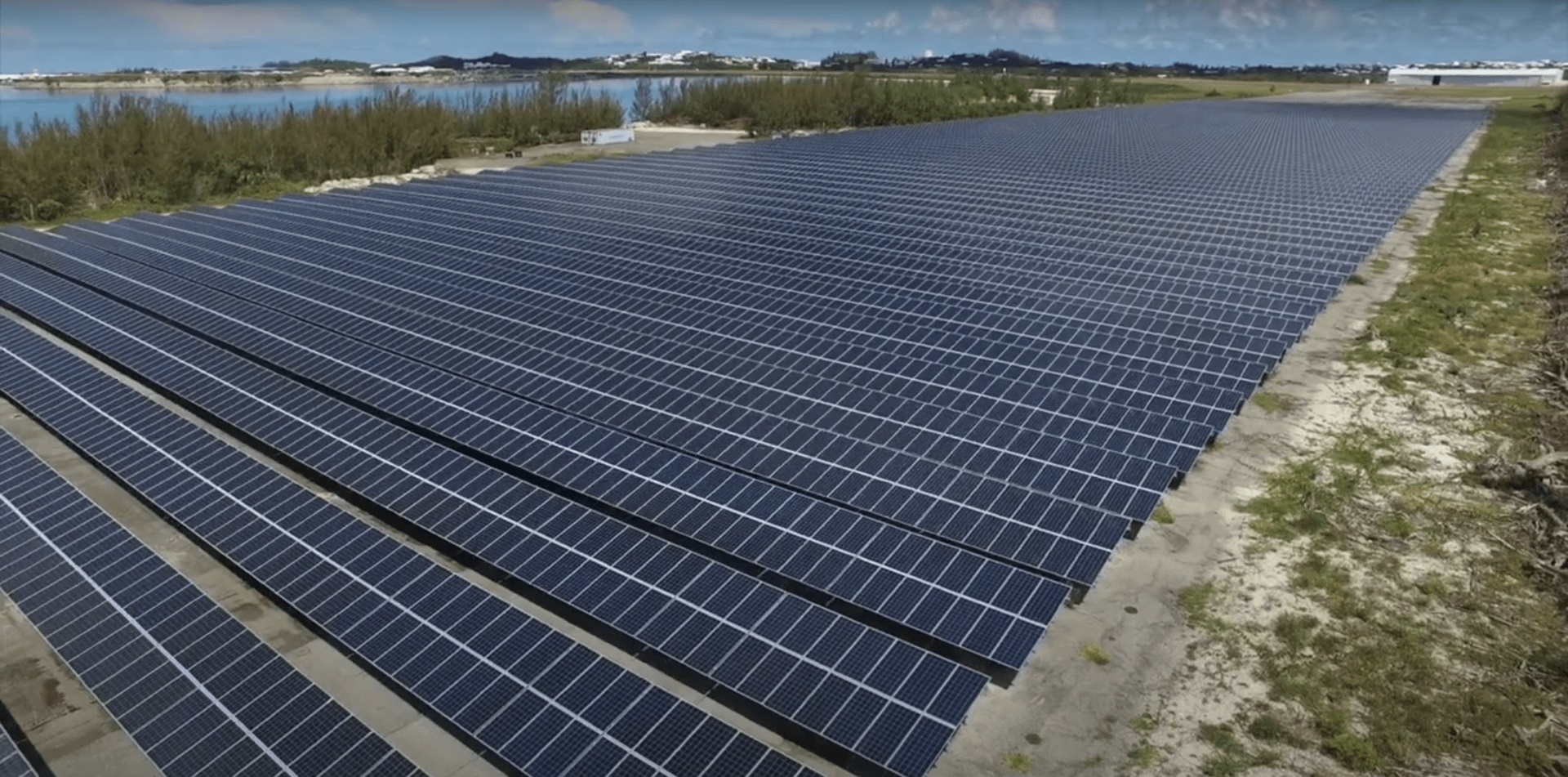
When the sun is shining, BELCO receives power from the solar farm installed at the Finger near the LF Wade International Airport and from the approximately 11 MW of Distributed Energy Resources installed on rooftops around the island. BELCO also receives approximate 2.5 MW of power generated from the Tynes Bay Waste to Energy Facility. The RA is responsible for issuing Bulk Generation licenses to any entity that desires to build a generating plant from either traditional or renewable energy sources.
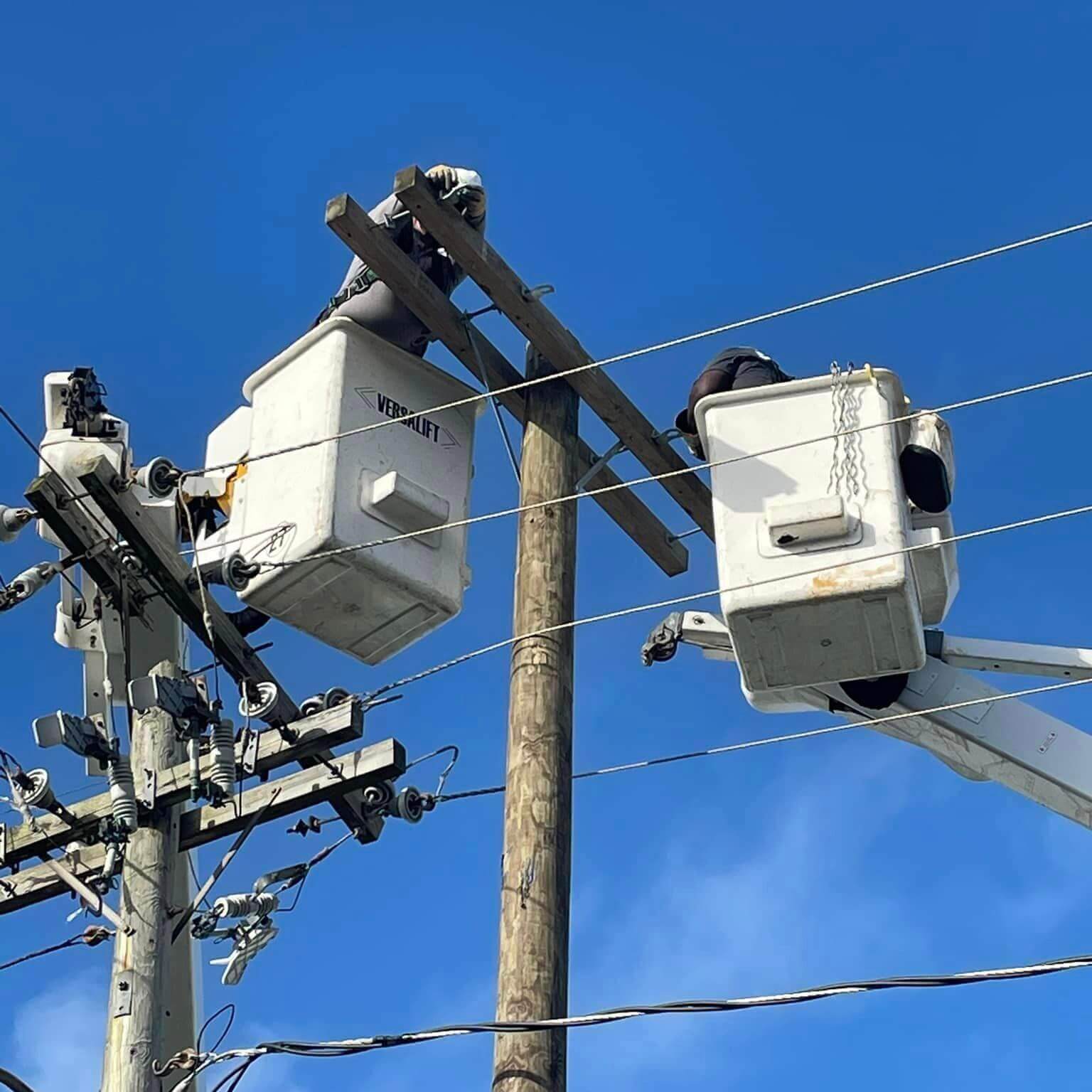
The TD&R license allows for the transmission, distribution, and sale of electricity to customers. TD&R has approximately 36,000 metered connections that are serviced through 34 substations, approx. 545 miles of high-voltage overhead distribution lines, 370 miles of low voltage overhead distribution lines, 120 miles of high-voltage underground transmission cables and 135 miles of low-voltage underground distribution cables. These components are part of our transmission and/or distribution network, which together make up the grid. Our transmission network carries electricity underground at high voltage over long distances, while our distribution network carries electricity overhead at a much lower voltage, which is then further reduced, for safe use in your home or business.
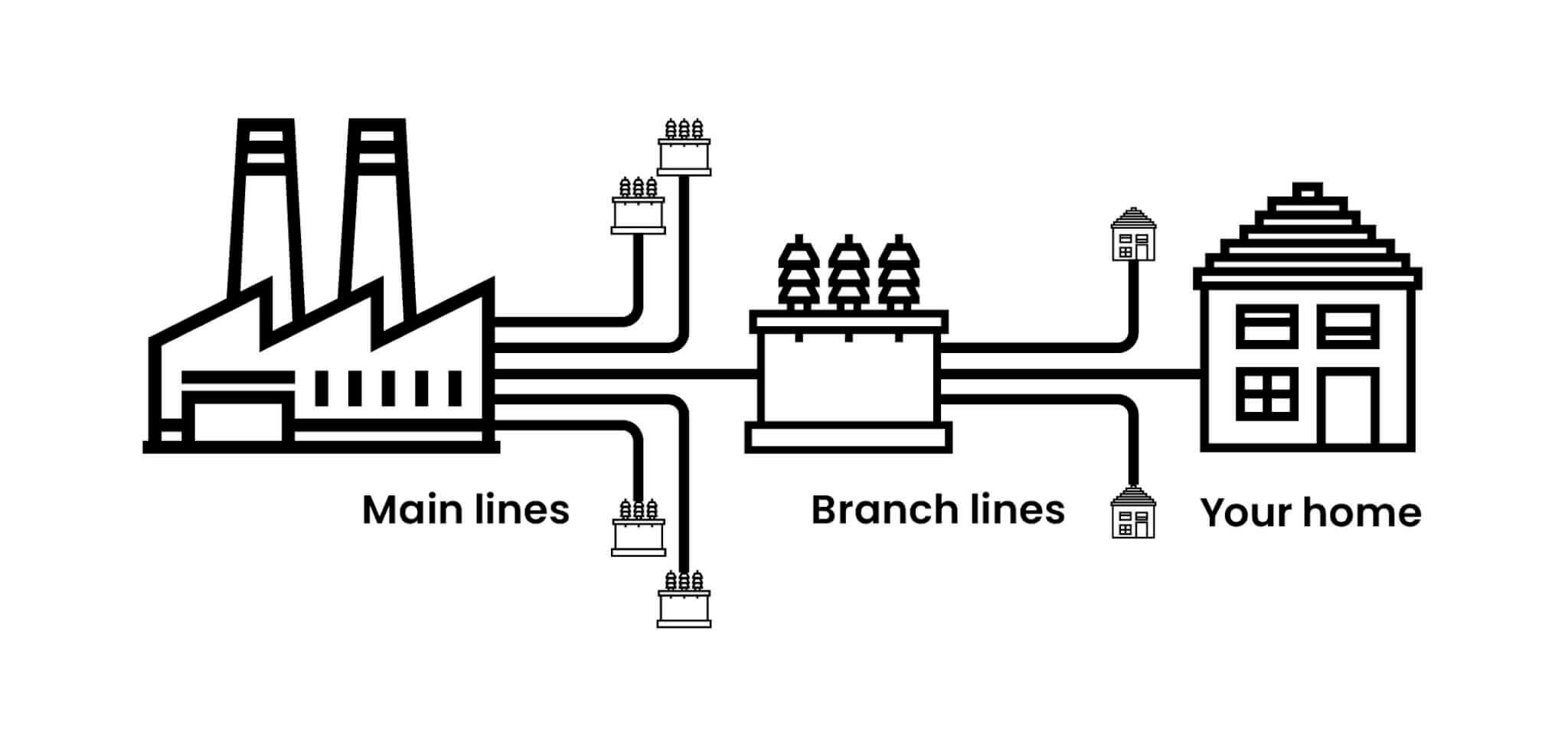
Most of Bermuda’s electricity supply originates at BELCO’s Serpentine Road plant and is transmitted via underground cables to substations, from there the electricity is distributed via overhead main lines that feed branch lines, which then supply electricity to your home or business. BELCO is currently the only TD&R licensee due to Bermuda’s small size, whereas there can be multiple BG licensees based on the RA’s approval of applications.
BELCO’s transmission network is entirely underground and is comprised of high voltage cables running from the generation plant on Serpentine Road to BELCO’s 34 substations where the electricity is transformed to a lower voltage for distribution to customers. BELCO’s underground transmission network serves as the backbone to the BELCO grid. In 2020 BELCO initiated a $50 million project to replace 40% of the underground transmission cables that were over 50 years old. These cables, and other transmission and distribution assets, were well beyond their useful life, resulting in a higher number of faults, system vulnerabilities, and higher maintenance costs. Based on the location, a fault in the high voltage cable network has the potential to affect thousands of customers, whereas a fault in an overhead main line or branch line circuit affects a far smaller number of customers.
While some sections of the distribution network have been put underground, such as for most of the City of Hamilton, cost and serviceability are the main reasons why the entire system is not underground. Fault identification and repair in an underground network is lengthy, costly, and more disruptive to customers and members of the public. This is because if a fault is identified in a section of the network the cable would have to be dug up to be repaired. With lengthy repairs comes lengthy outage times for customers.
Currently, the most cost-effective way to provide safe, reliable energy to Bermuda is for the overhead cables to remain as they are while continuing the current project to upgrade and ensure a more robust underground high-voltage transmission network.
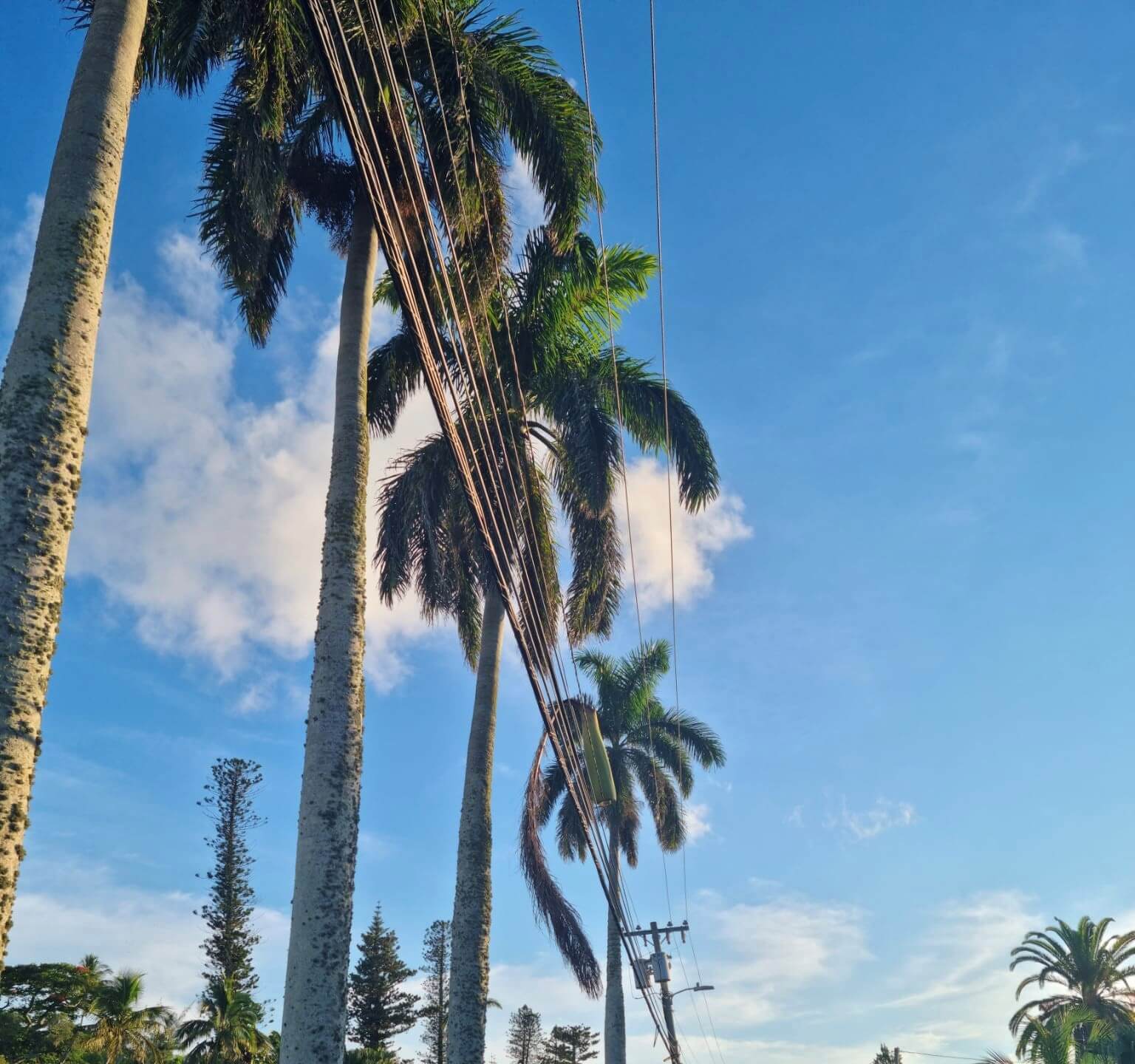
Outages stemming from the overhead distribution lines are generally due to foreign matter e.g. kites, trees and foliage not being trimmed on private property and coming into contact with power lines, pole, and conductor damage from events such as weather, vehicle collisions, aged equipment, these outages are normally quicker to fix and result in fewer customers being affected by an outage. Planned maintenance also contributes to outages but are required for ensuring the reliability of the network.
Faults in the underground transmission network are generally caused by the failure of aged cables, damage by excavation works of other subterranean activity resulting in increased maintenance costs for repair. The faults in underground cables require a significant amount of time to find the fault and fix it, as that requires trenching to dig up the cable and for faults on the distribution network this can result in a significant number of customers being affected by an outage over a long duration.
Our commitment at BELCO to the residents and businesses in Bermuda is to ensure a safe, reliable supply of power. Our team works diligently 24 hours a day, 365 days a year to keep the lights on and, despite occasional outages, especially due to tropical storms and hurricanes, we remain one of the most reliable power providers in the world. We have made substantial investments in our plant and grid so that we can continue to ensure this reliability and we look forward to the ongoing transition to a sustainable energy future.