
ALL CUSTOMERS
WHAT IS CHANGING ON AUGUST 1, 2026?
Following approval by the Regulatory Authority, BELCO’s electricity rates will be restructured and customer bills redesigned. These changes will affect all customer categories (Residential, Small Commercial and Demand).
WHY ARE THE RATES BEING RESTRUCTURED?
The change follows a cost-of-service study. The goal is a fairer sharing of costs, so that charges better reflect how each customer actually uses the grid. Customers who both take power from the grid and send power to it use the system differently from those who only take power, and the new structure reflects that.
WHAT RATES ARE CHANGING?
As of August 1, 2026, the base electricity rate will be changed and the rates are being unbundled for greater transparency. Additionally, the Graduated Facilities Charge will increase to better reflect how customers use electricity today.
Remember the charges apply only to the energy you consume, so reducing your usage is the most direct way to manage your bill.
WHAT IS BEING REDESIGNED ON THE BILL AS OF AUGUST 1, 2026?
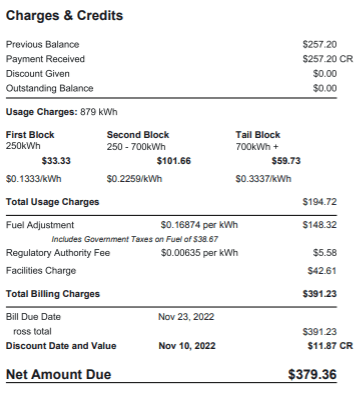
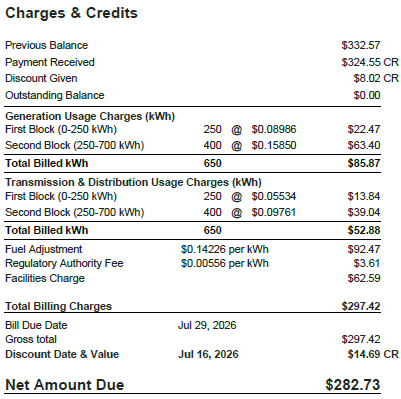
With the 2026 base electricity rate unbundling, the Charges & Credits section of your bill will now show the unbundled rate.
To see a sample residential bill, click HERE.
Before August 1, 2026
Charges & Credits Section
Residential, Non-Solar
After August 1, 2026
Charges & Credits Section
Residential, Non-Solar
WHAT CAN ALL CUSTOMERS DO TO TAKE CONTROL OF THEIR MONTHLY BILL?
Customers have more control they they think. The biggest factor affecting the overall monthly bill is how much energy your household or business consumes, and that’s something you can influence.
To learn more about how you can reduce your monthly consumption, click HERE and review our energy efficiency tips.
Don’t forget to pay on or before the discount date shown on your bill to take advantage of the monthly BELCO discount as well. Note that payments made by ATM or online banking can take two working days to reach us, so allow time before the discount date.
RESIDENTIAL CUSTOMERS
HOW IS THE BASE ELECTRICITY RATE CHANGING FOR RESIDENTIAL CUSTOMERS?
As of August 1, 2026, the base electricity rate will be changed and unbundled for greater transparency. The base electricity rate will now be shown in two parts: the cost to generate the electricity, and the cost to deliver it to you through the grid.
To review the Base Electricity Rates for Residential Customers, click HERE.
HOW IS THE GRADUATED FACILITIES CHARGE CHANGING FOR RESIDENTIAL CUSTOMERS?
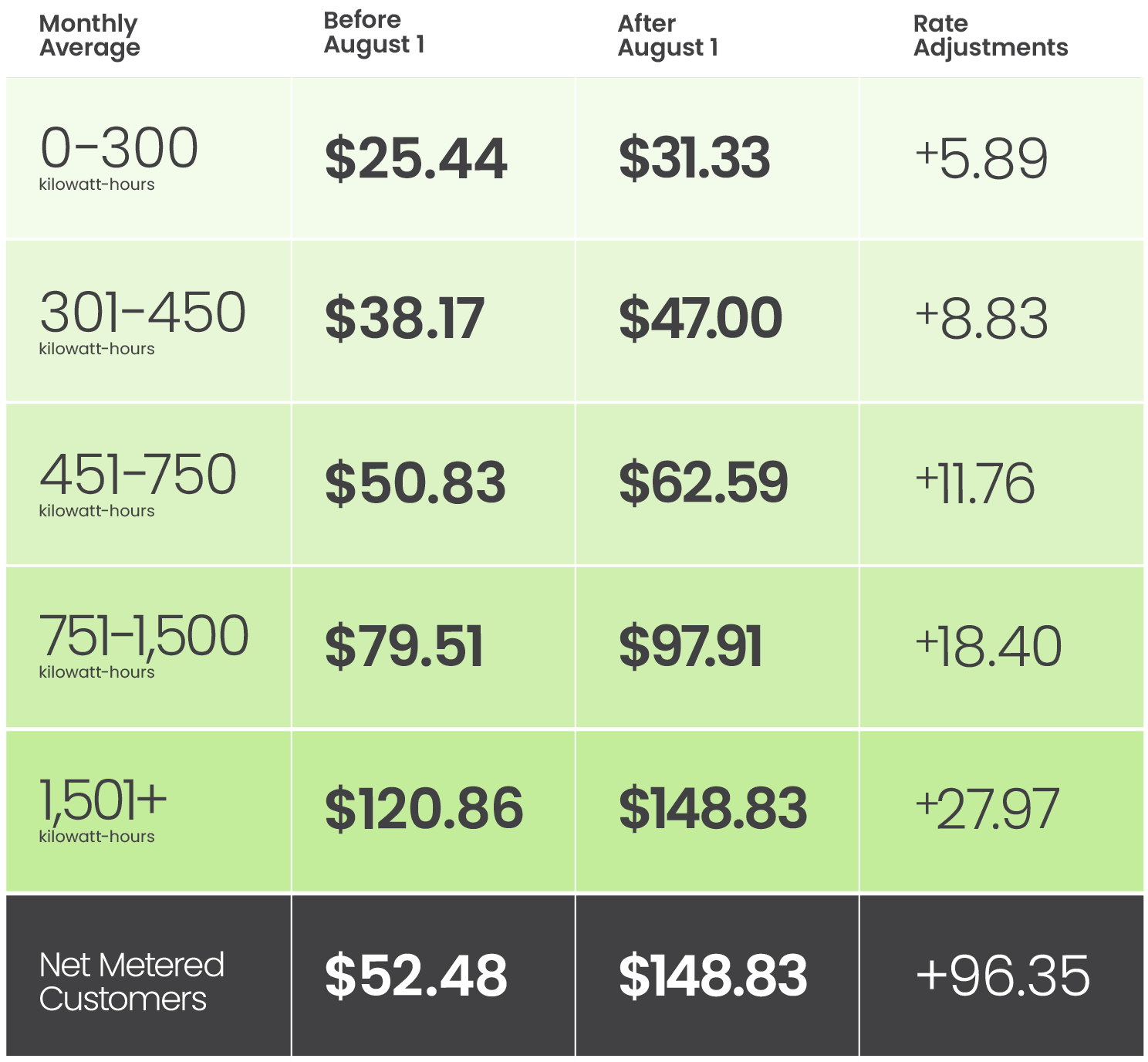
As of August 1, 2026, the Graduated Facilities Charge will be increased to be more cost-reflective of the service provided to each customer. Customers who both self-generate and consume energy from the grid use the system differently from those who only require electricity to be delivered to their homes. The revised rate structure better aligns charges with actual grid usage, so costs are shared more fairly across all customers.
To review the Graduated Facilities Charges for Residential Customers, click HERE.
Review the table below to see what the Graduated Facilities Charge changes look like for Residential Customers.
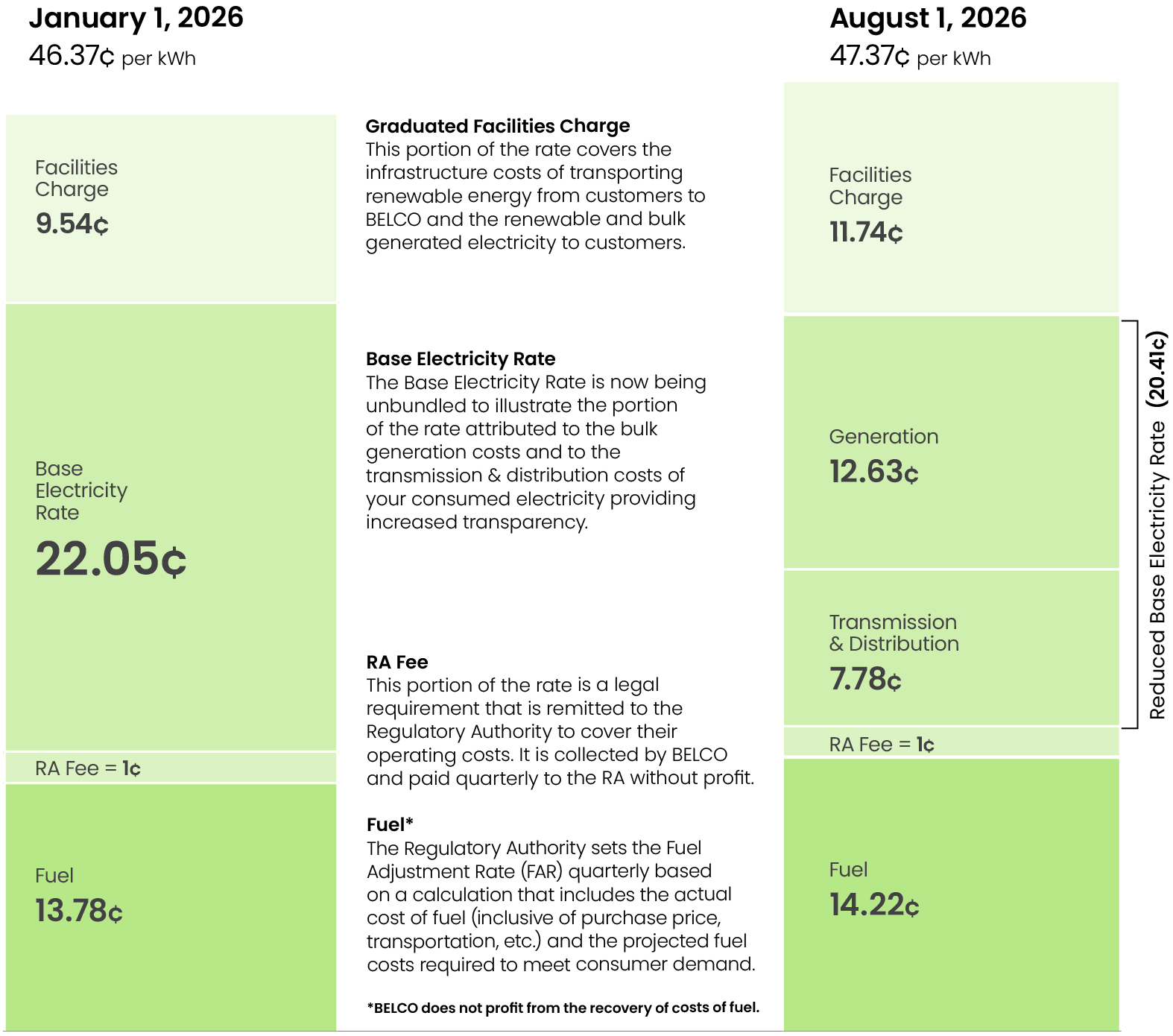
HOW DOES THIS IMPACT THE OVERALL PER KILOWATT HOUR PRICE?
The impact varies by customer class and by usage, so the change is not a single across-the-board increase or decrease.
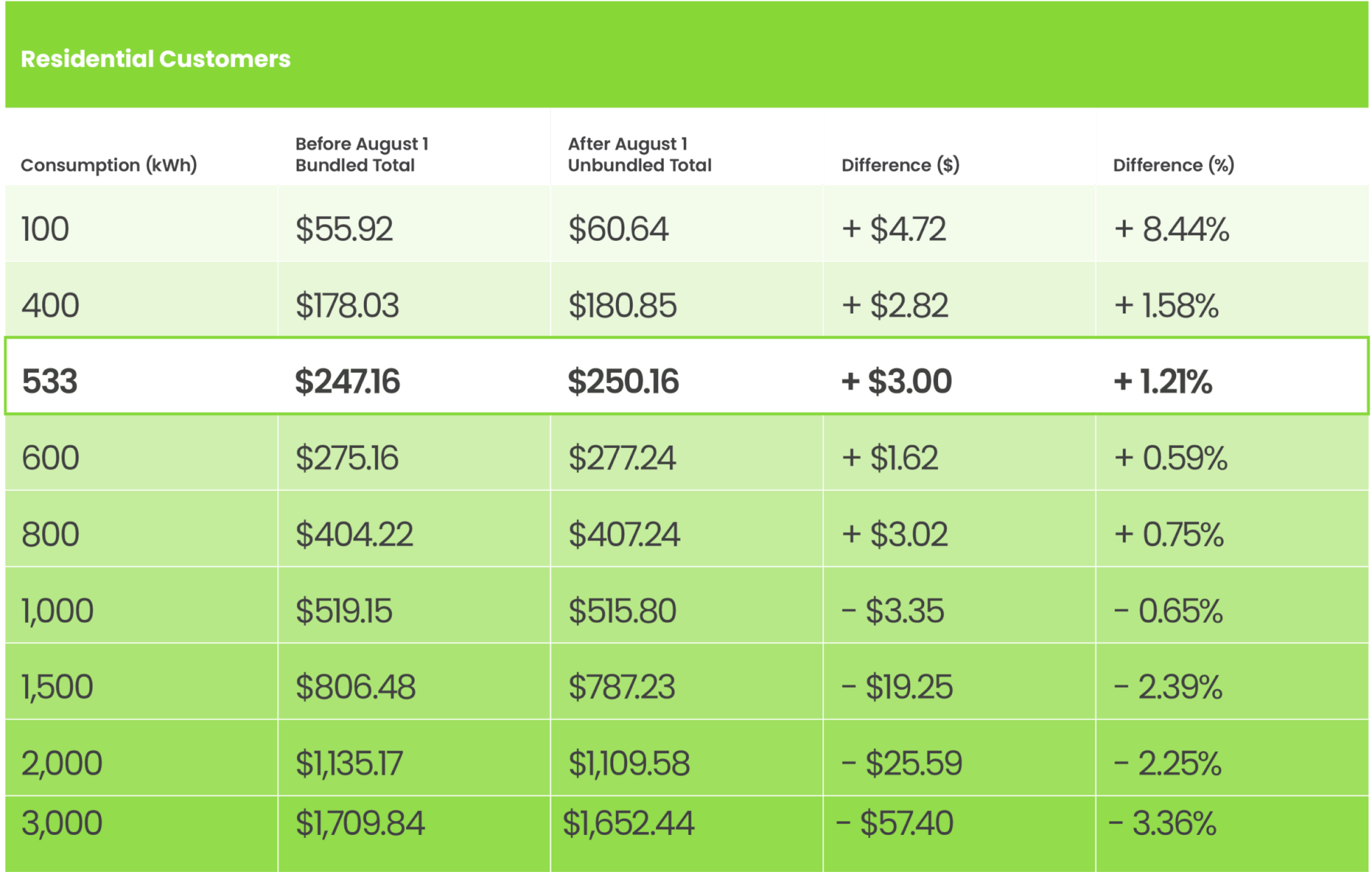
The average residential, non-solar customer uses approximately 533 kWh per month. The below comparison uses that average residential household consumption to illustrate the overall impact on the per kilowatt hour pricing.
HOW DOES THIS IMPACT MY OVERALL MONTHLY BILL?
The impact varies by customer class and by usage, so the change is not a single across-the-board increase or decrease. For most residential customers who do not have distributed generators (primarily rooftop solar), the change means a modest increase of around $1.62 to $4.72 a month.
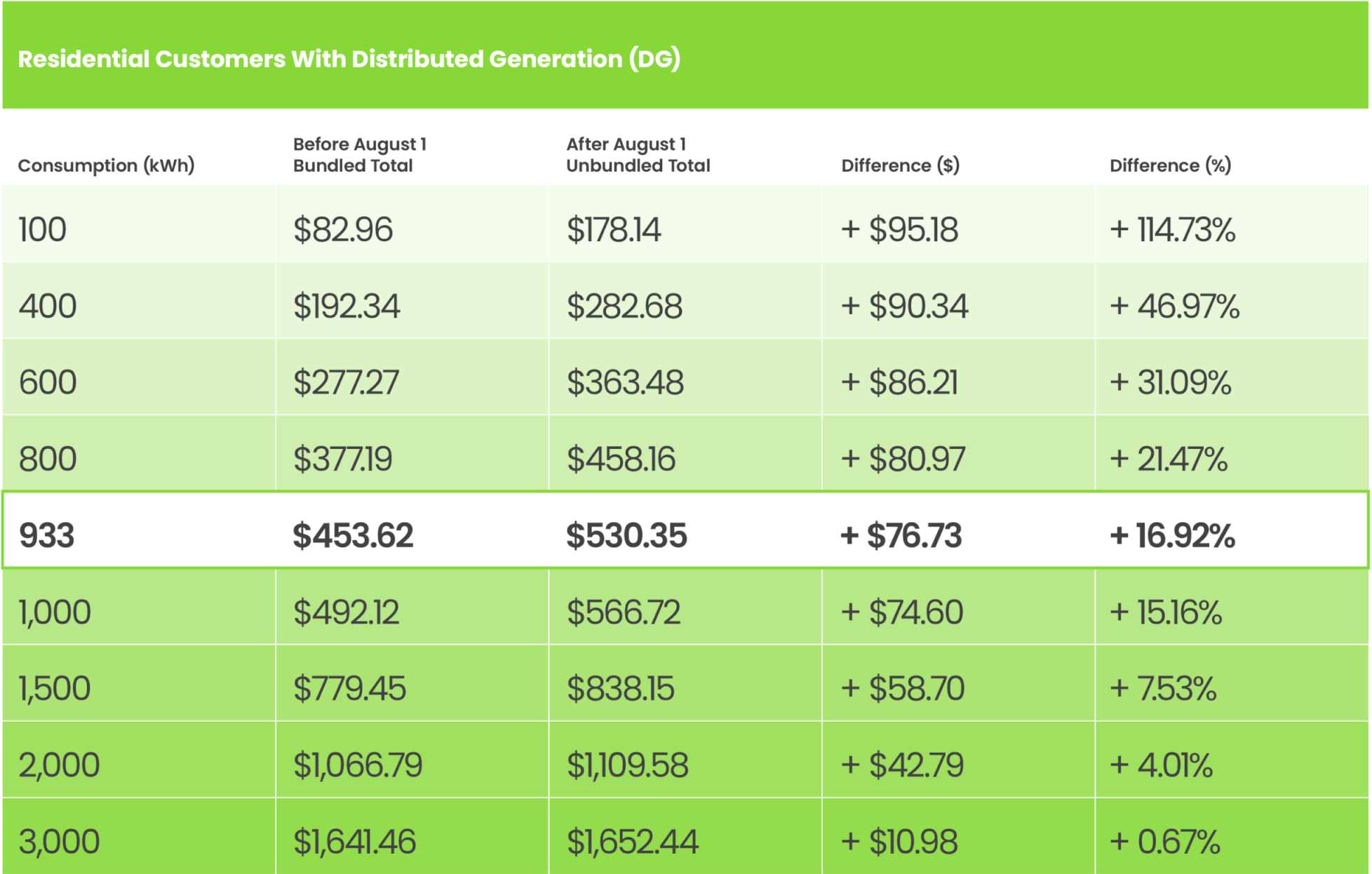
Customers with distributed generators will see a larger increase, primarily in their Facilities Charge, which reflects the increased cost of operating and maintaining a grid that now must carry power to and from their home or business, while maintaining a reliable supply for the entire island
The below tables show the overall impact of the rate restructuring on varying monthly consumption amounts.
- The average residential, non-solar household in Bermuda consumes 533 kWh per month.
- The average residential, solar household in Bermuda consumes 933 kWh per month.
HOW HAS THE LOOK OF MY BILL CHANGED?
With the 2026 base electricity rate unbundling, the Charges & Credits section of your bill looks different as it now shows the unbundled rate.
To see a sample residential bill, click HERE.
Before August 1, 2026
Charges & Credits Section
Residential, Non-Solar
After August 1, 2026
Charges & Credits Section
Residential, Non-Solar
SMALL COMMERCIAL CUSTOMERS
HOW IS THE BASE ELECTRICITY RATE CHANGING FOR SMALL COMMERCIAL CUSTOMERS?
As of August 1, 2026, the base electricity rate will be changed and unbundled for greater transparency. The base electricity rate will now be shown in two parts: the cost to generate the electricity, and the cost to deliver it to you through the grid.
To review the Base Electricity Rates for Small Commercial Customers, click HERE.
HOW IS THE GRADUATED FACILITIES CHARGE CHANGING FOR SMALL COMMERCIAL CUSTOMERS?
As of August 1, 2026, the Graduated Facilities Charge will be increased to be more cost-reflective of the service provided to each customer. Customers who both self-generate and consume energy from the grid use the system differently from those who only require electricity to be delivered to their business. The revised rate structure better aligns charges with actual grid usage, so costs are shared more fairly across all customers.
To review the Graduated Facilities Charges for Small Commercial Customers, click HERE.
WHAT IS THE NEW FACILITIES CHARGE FOR MISCELLANEOUS SMALL COMMERCIAL CUSTOMERS?
Miscellaneous Small Commercial Customers related to small government structures, churches, and quarries will see a fixed charge that results in an overall modest increase to their monthly bill. This new fixed charge is the Graduated Facilities Charge which covers the cost of maintenance, equipment and infrastructure that we need to deliver electricity safely and reliably.
HOW DOES THIS IMPACT MY OVERALL MONTHLY BILL?
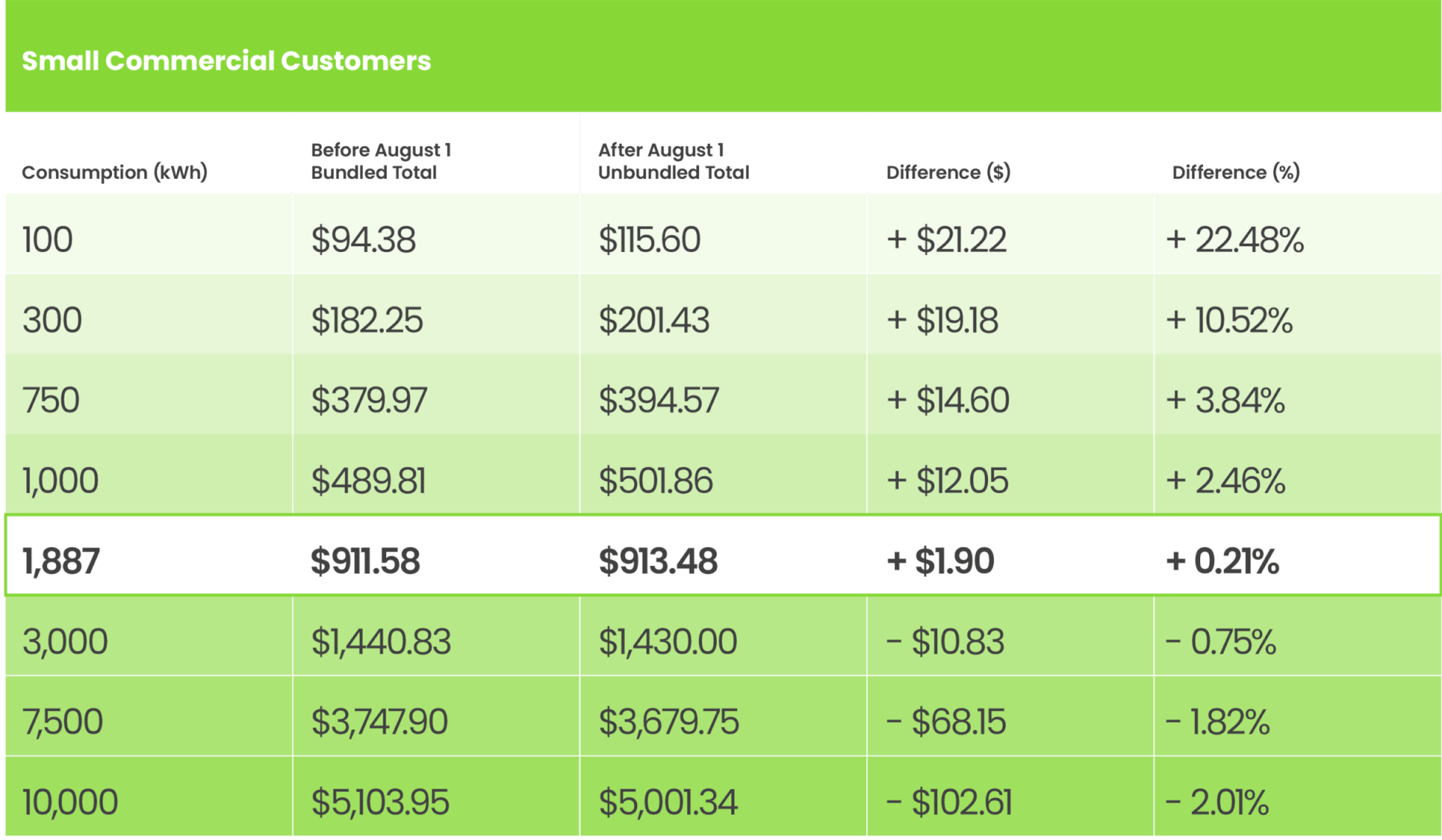
The impact varies by usage, so the change is not a single across-the-board increase or decrease. For most small commercial customers who do not have distributed generators (primarily rooftop solar), the change means a modest increase of around $1.90 to $21.22 a month.
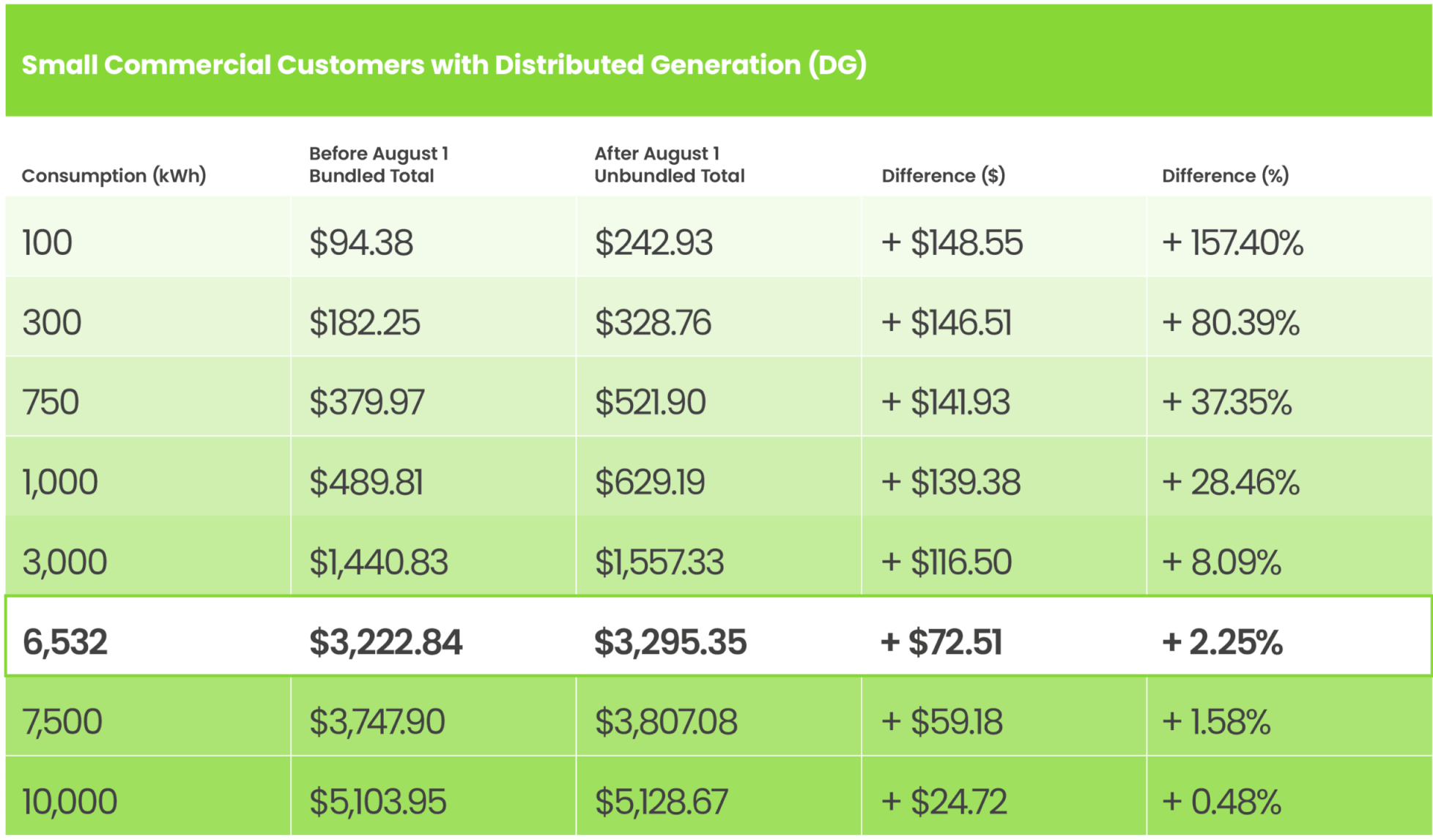
Customers with distributed generators will see a larger increase, primarily in their Facilities Charge, which reflects the increased cost of operating and maintaining a grid that now must carry power to and from their business, while maintaining a reliable supply for the entire island.
The below tables show the overall impact of the rate restructuring on varying monthly consumption amounts.
- The average small commercial, non-solar customer in Bermuda consumes 1,887 kWh per month.
- The average small commercial, solar customer in Bermuda consumes 6,532 kWh per month.
DEMAND CUSTOMERS
HOW IS THE BASE ELECTRICITY RATE CHANGING FOR DEMAND CUSTOMERS?
As of August 1, 2026, the base electricity rate will be changed and unbundled for greater transparency. The base electricity rate will now be shown in two parts: the cost to generate the electricity, and the cost to deliver it to you through the grid.
To review the Base Electricity Rates for Demand Customers, click HERE.
HOW IS THE GRADUATED FACILITIES CHARGE CHANGING FOR SMALL COMMERCIAL CUSTOMERS?
As of August 1, 2026, the Graduated Facilities Charge will be increased to be more cost-reflective of the service provided to each customer. Customers who both self-generate and consume energy from the grid use the system differently from those who only require electricity to be delivered to their business. The revised rate structure better aligns charges with actual grid usage, so costs are shared more fairly across all customers.
To review the Graduated Facilities Charges for Demand Customers, click HERE.
WHAT IS THE NEW FACILITIES CHARGE FOR MISCELLANEOUS SMALL COMMERCIAL CUSTOMERS?
Miscellaneous Small Commercial Customers related to small government structures, churches, and quarries will see a fixed charge that results in an overall modest increase to their monthly bill. This new fixed charge is the Graduated Facilities Charge which covers the cost of maintenance, equipment and infrastructure that we need to deliver electricity safely and reliably.
HOW DOES THIS IMPACT ME?
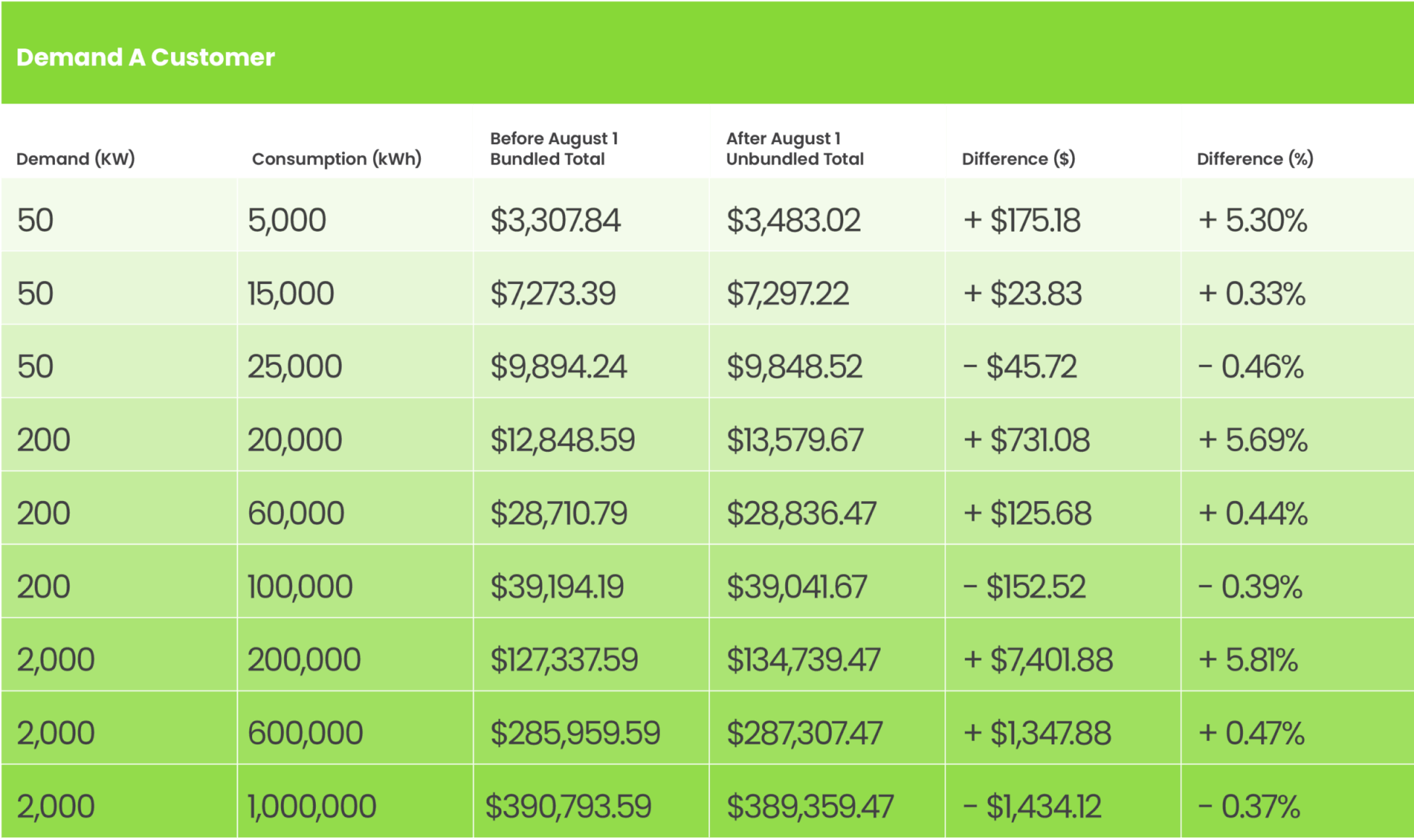
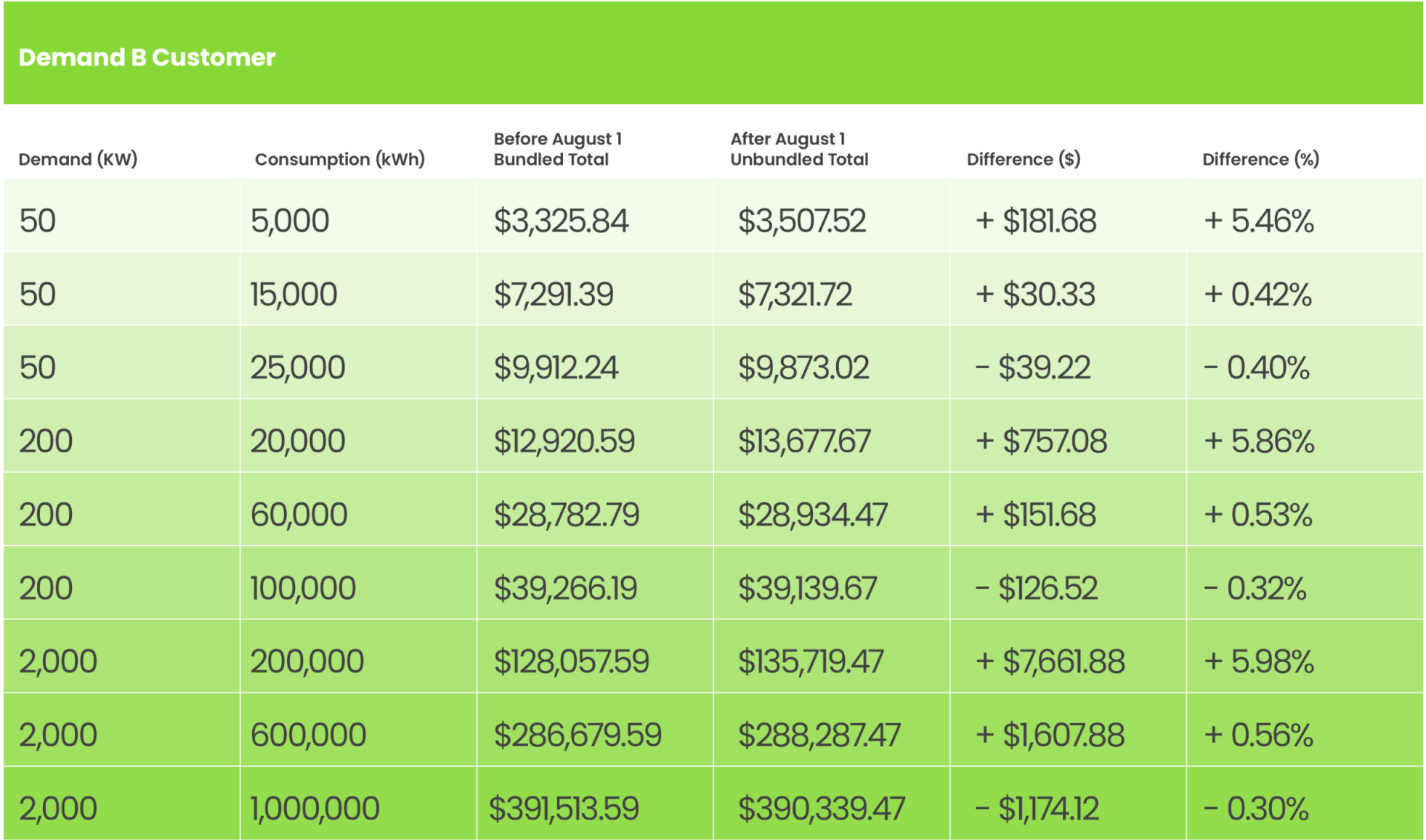
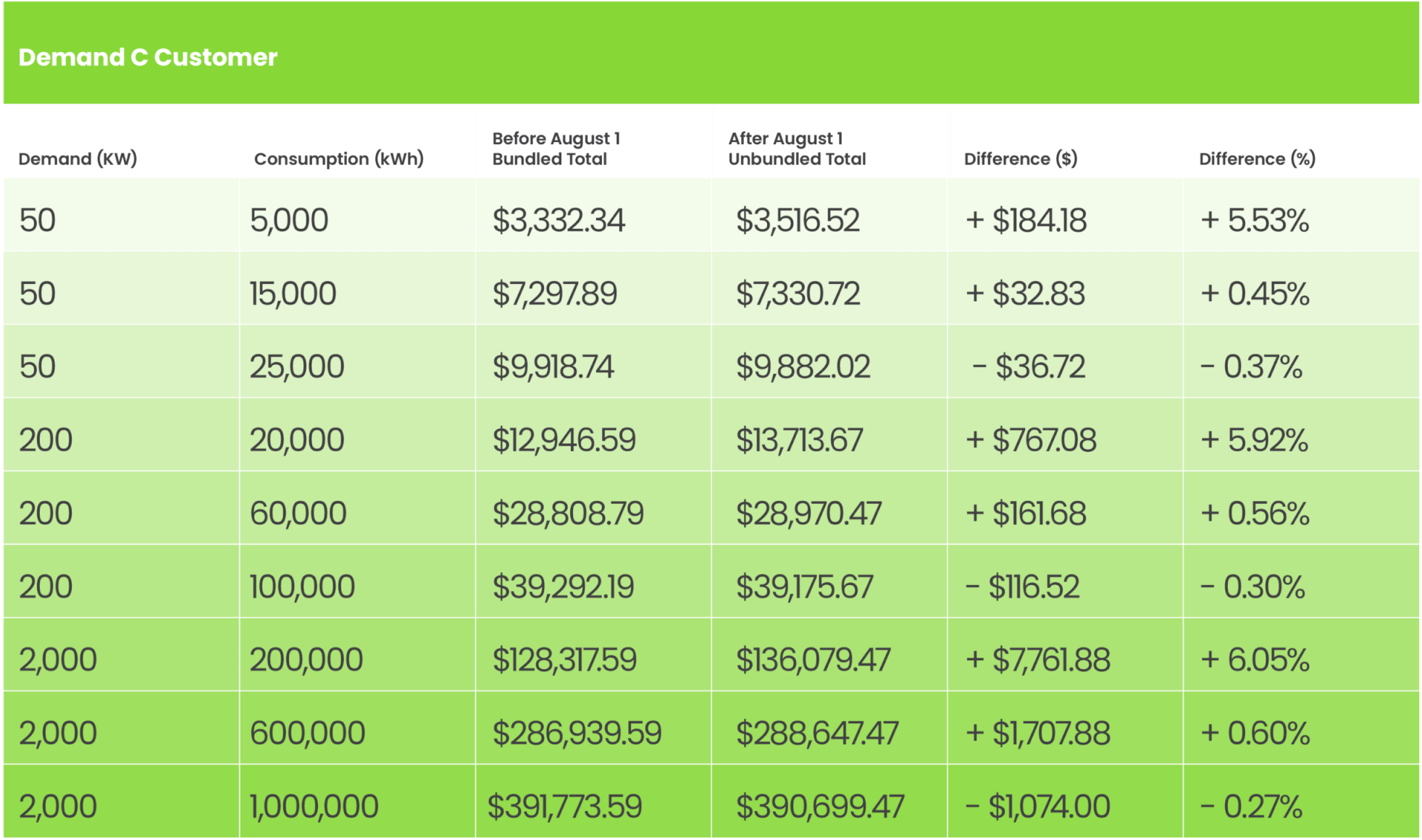
Demand customers use the system in different ways, so the impact is not the same for everyone. It is determined largely by your load factor, which is a measure of how efficiently you use energy. Customers with a high load factor (steady energy usage over time) will generally see a modest decrease, while customers with a lower load factor will generally see a modest increase.
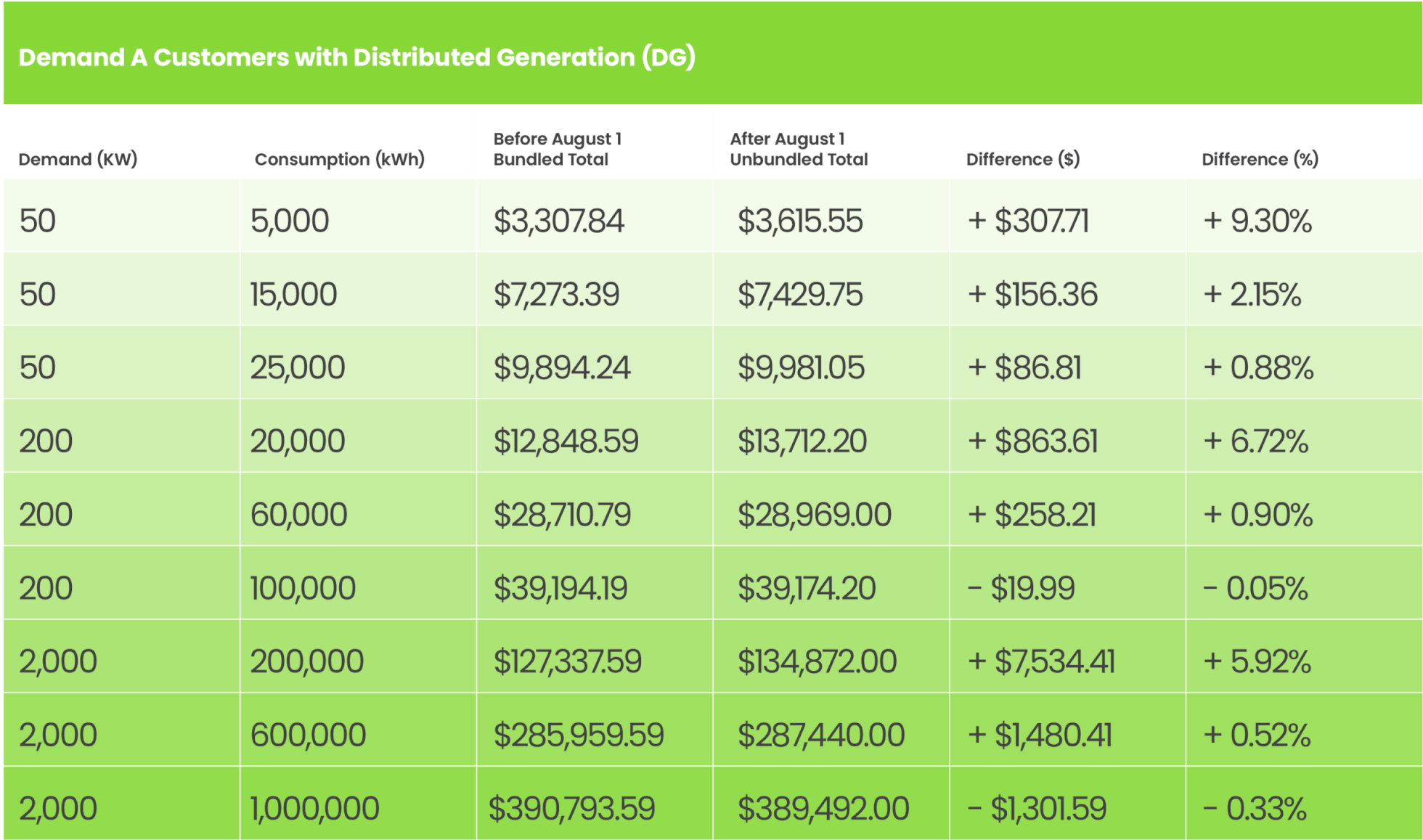
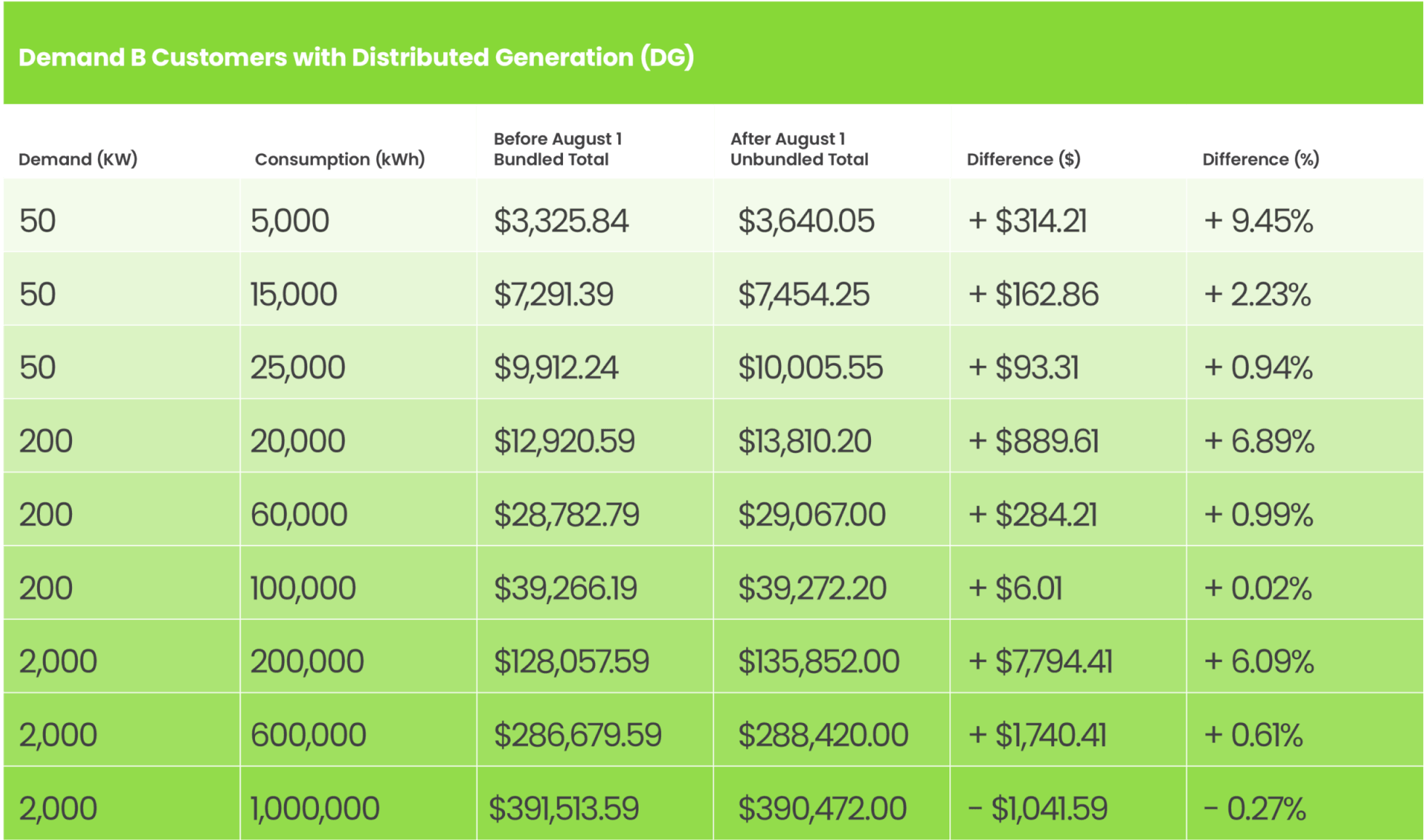
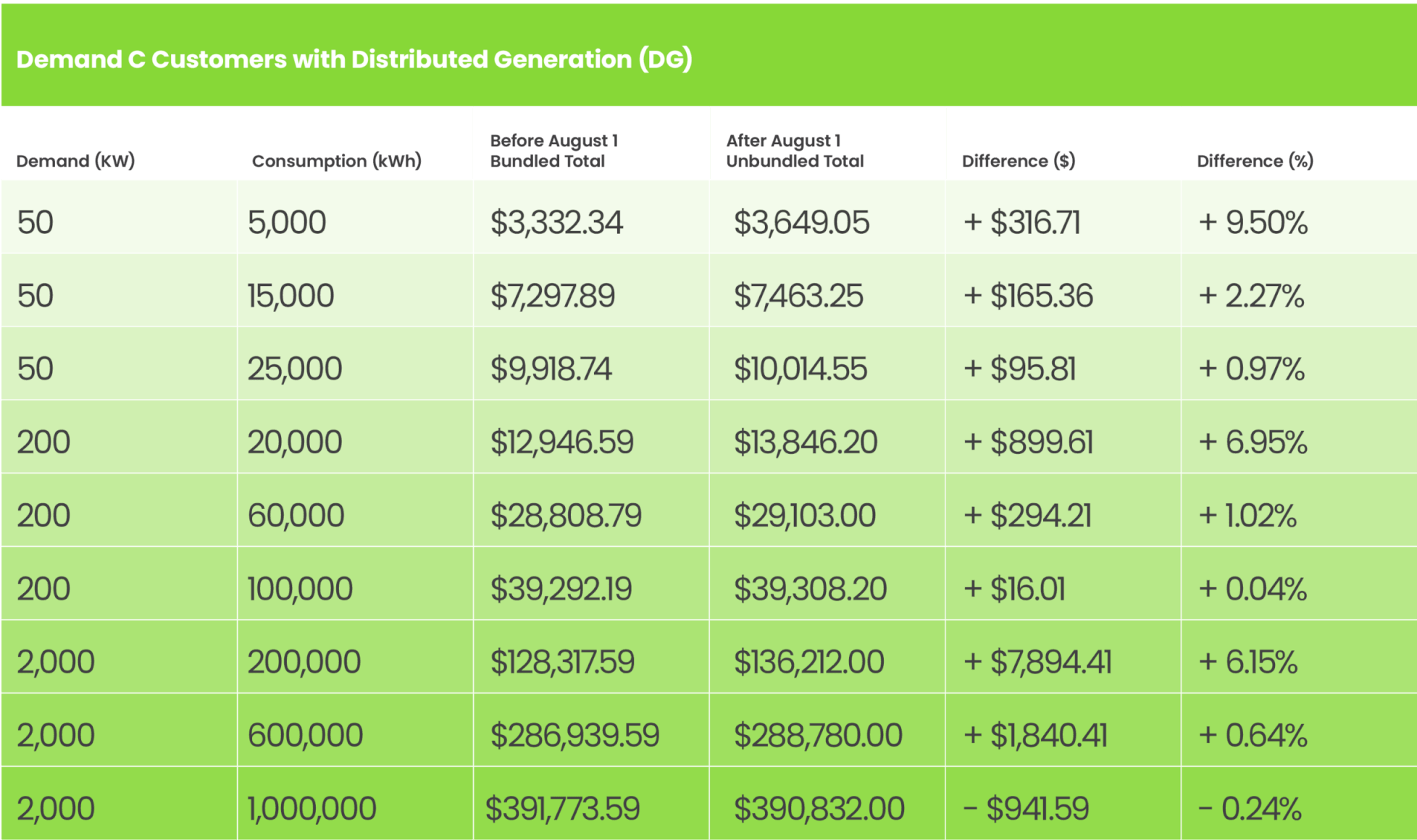
Customers with distributed generators will see an increase associated with their Facilities Charge, which reflects the increased cost of operating and maintaining a grid that now must carry power to and from their business, while maintaining a reliable supply for the entire island.
The below tables show the overall impact of the rate restructuring on varying monthly consumption amounts.
SOLAR & DISTRIBUTED GENERATION CUSTOMERS
HOW DOES THE RATE CHANGE AND RESTRUCTURING AFFECT SOLAR AND DISTRIBUTED GENERATION CUSTOMERS?
As of August 1, 2026, the base electricity rate will be changed and the rates are being unbundled for greater transparency. Additionally, the Graduated Facilities Charge will increase to better reflect how customers use electricity today.
The change follows a cost-of-service study. The goal is a fairer sharing of costs, so that charges better reflect how each customer actually uses the grid. Customers who both take power from the grid and send power to it use the system differently from those who only take power, and the new structure reflects that.
Customers with distributed generators will see a larger increase, primarily in their Facilities Charge, which reflects the increased cost of operating and maintaining a grid that now must carry power to and from their home or business, while maintaining a reliable supply for the entire island .
HOW IS THE BASE ELECTRICITY RATE CHANGING FOR SOLAR AND DISTRIBUTED GENERATION CUSTOMERS?
As of August 1, 2026, the base electricity rate will be changed and unbundled for greater transparency. The base electricity rate will now be shown in two parts: the cost to generate the electricity, and the cost to deliver it to you through the grid.
To review the Base Electricity Rates for Solar and Distributed Generation Customers, click HERE.
HOW IS THE GRADUATED FACILITIES CHARGE CHANGING FOR SOLAR & DISTRIBUTED GENERATION CUSTOMERS?
As of August 1, 2026, the Graduated Facilities Charge will be increased to be more cost-reflective of the service provided to each customer. Customers who both self-generate and consume energy from the grid use the system differently from those who only require electricity to be delivered to their business. The revised rate structure better aligns charges with actual grid usage, so costs are shared more fairly across all customers.
To review the Graduated Facilities Charges for Solar and Distributed Generation Customers, click HERE.
HOW DOES THIS IMPACT MY OVERALL MONTHLY BILL?
Customers with distributed generators will see an increase associated with their Facilities Charge, which reflects the increased cost of operating and maintaining a grid that now must carry power to and from their business, while maintaining a reliable supply for the entire island.
FAQs
What is changing?
As of 1 August, the rates on your bill will be unbundled for greater transparency, and will have been restructured to better reflect how customers use electricity today. You will see the parts of your rate more clearly, and depending on how you use energy, your bill may go up or down modestly.
What does "unbundled" mean?
It means the charge for your electricity is now shown in two parts: the cost to generate it, and the cost to deliver it to you through the grid. This allows you to see what you are paying for.
Why has BELCO changed the rates?
The change follows direction from the RA to introduce rates that are cost-reflective of the service provided to each customer. The goal is a fairer sharing of costs, so that charges better reflect how each customer actually uses the grid. Customers who both take power from the grid and send power to it use the system differently from those who only take power, and the new structure reflects that.
When does this take effect?
1 August 2026. The first bills in the new format and under the new rates will arrive on or after August 1.
How much more will I pay?
For most residential, non-solar customers, the change is modest, around $1.62 to $4.72 more a month. Your exact change depends on how much electricity you use. Review the full break down above for the various customer categories (Residential, Small Commercial and Deamnd).
Why is my bill different from my neighbour's bill?
Because the change depends on how much energy you use and whether or not you are generating electricity yourself and exporting it to BELCO. Everyone’s usage is different, so the impact is different.
Can you give me examples of the change to my monthly bill?
Yes. A typical residential customer using about 533 kilowatt hours a month sees roughly a $3.00 increase. A typical commercial customer using about 1,887 kilowatt hours sees roughly a $1.90 increase. How the rate changes impact your own bill depends on your usage.
Is this just BELCO increasing prices?
It is a restructuring of how costs are shared, not a single across-the-board increase or decrease. Some customers pay a little more, some pay a little less, based on how they use the grid.
My bill looks a lot higher this August. Why?
Two things can be happening at once. The new rates started on 1 August, and August is our hottest, highest month of electricity consumption, so usage is usually up as well, particularly as customers use air conditioning for cooling.
What can I do to lower my bill?
The biggest factor is how much energy you use, and that’s something you can influence. There are energy savings tips at belco.bm.
These changes only affect the energy I use, right?
The changes apply to base rates, including the energy charges and the facilities charge, so reducing your usage is the most direct way to manage your bill.
How do I make sure I get my discount?
Pay on or before the discount date shown on your bill. Note that payments made by ATM or online banking can take two working days to reach us, so allow time before the discount date.
Where can I see the full details?
Everything is on belco.bm, including tables and worked examples showing how the change affects each type of customer.
Small Commercial Customers
I have never had a Facilities Charge before. Why do I have one now?
Some commercial customers were previously billed only on the energy they used, with no fixed charge. Under the new structure, a facilities charge now applies, reflecting the cost of the grid connection that serves you.
Solar & Distributed Generaton Customers
I have solar. Why is my increase bigger?
Customers with solar use the grid to consume energy and to export energy back onto the grid. The facilities charge covers the cost of keeping that bi-directional grid reliable, and it has increased most for customers with distributed generators.
How much is the Facilities Charge for customers with solar increasing?
It depends on your customer class. Review the above information or visit our Know Your Rate & Bill page to seeall customer class rates.
Is this a penalty for going solar?
We understand why it might feel that way. The change isn’t about discouraging solar. It reflects that solar customers rely on the grid to move electricity in both directions, putting additional strain on network infrastructure. The charge covers the cost of keeping that grid available and reliable for all customers whenever they need it.
Press Release
Read the rate and bill change notice.
Rate & Bill
Review current rates and bill samples.
Efficiency Tips
Learn ways to lower your consumption.