

In May 1907 the Bermuda Electric Light, Power and Traction Company Limited (BELP&T) provided the first commercial electricity to a handful of customers in Hamilton. The Company had been incorporated several years earlier by several prominent Bermudian businessmen. The ‘Traction’ referred to plans to eventually introduce an electric tram system to provide transportation across the island.
Our first engine was operated from a house on East Broadway and King Street and was a 70 horsepower Nash gas engine connected to a 50-kilowatt Crocker Wheeler alternator with gas supplied by an Otto gas producer. The total output of our first engine was equivalent to 175 candle power lamps.
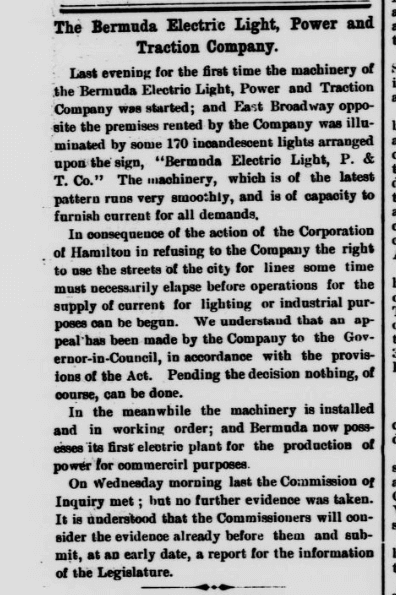
IMAGE: Royal Gazette | Saturday, February 23, 1907
Demand for electricity quickly grew and less than a year after providing electricity to our first customers, in March 1908, we purchased 4.5 acres on Serpentine Road and moved our single engine from Hamilton to the new site. By November 1908 it was clear that the single 50 KW engine was insufficient to meet growing demand for electricity, so we ordered a second generating unit followed closely by a third, a 210-brake horsepower engine as well as a gas suction plant and alternator.
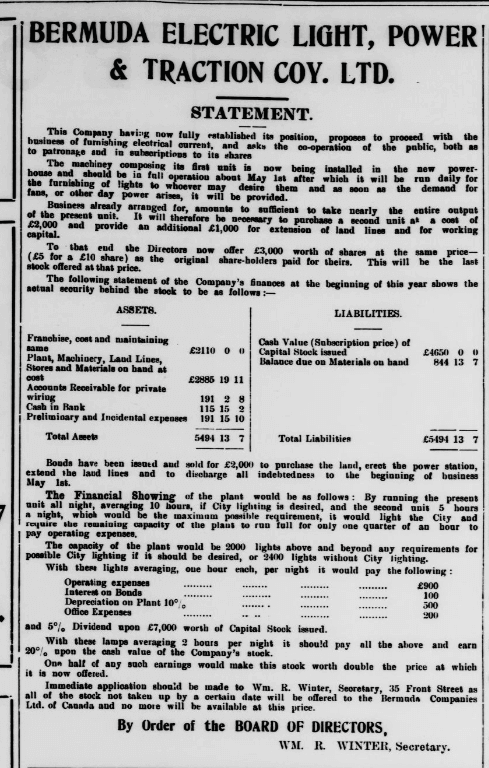
IMAGE: Royal Gazette | Saturday, April 25, 1908
At the same time, construction began on our new, purpose-built power station at Serpentine Road in 1908 and continued into the 1930s.
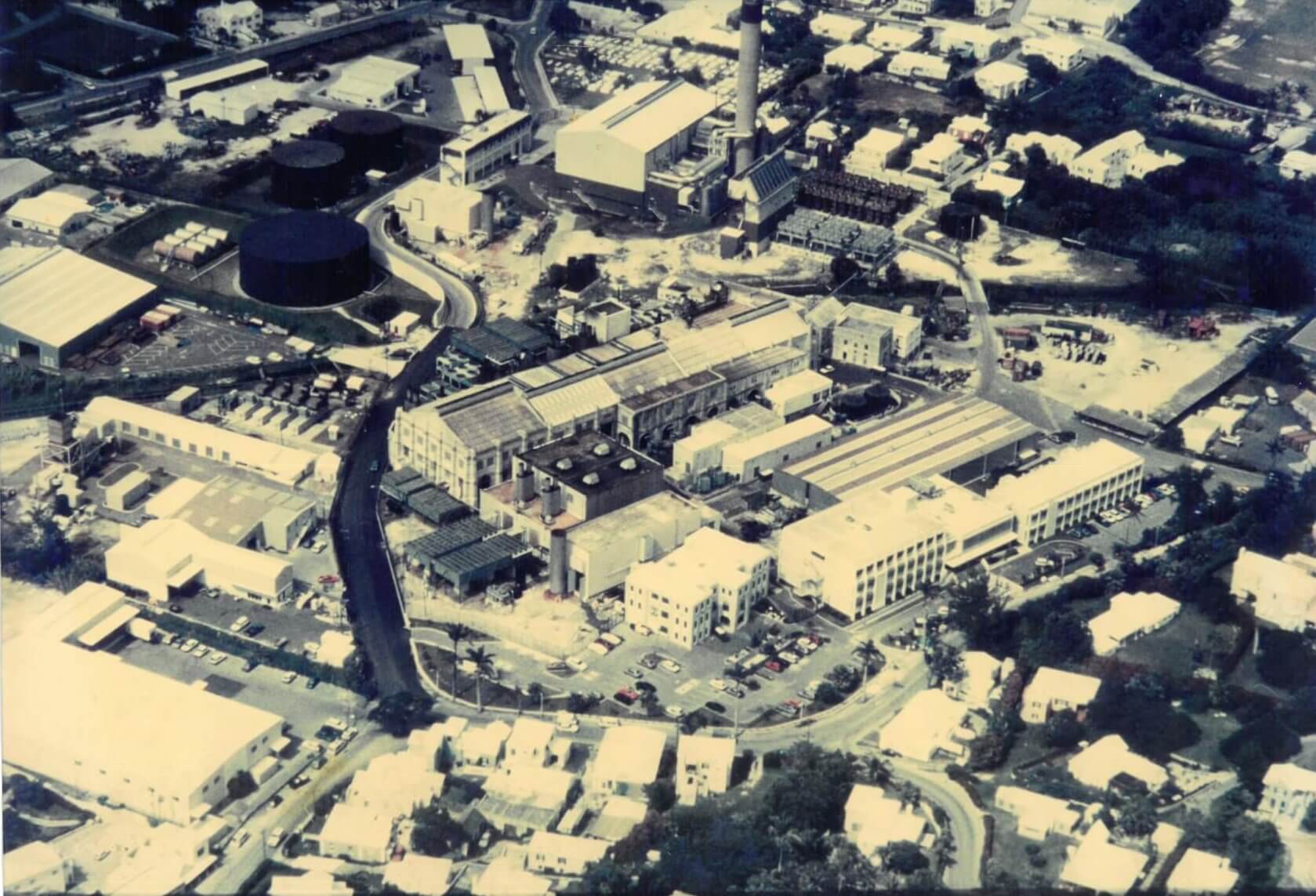
IMAGE: BELCO Plant Aerial, Unknown Year
During the 1910s, our subscribers were steadily increasing and by December 1910, we announced that electric service would be supplied all night “until further notice”. During the decade, we Installed an additional three 150-kilowatt Campbell gas suction engines in our new power station.
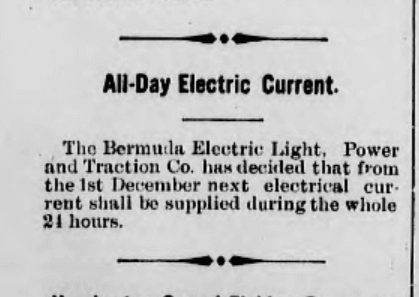
IMAGE: Royal Gazette | Thursday, November 24, 1910
By the 1920s our distribution grid had steadily grown and by 1928 we announced that electrical service was available to customers in all parts of the island, “from Ireland Island to St. David’s Head.” As demand increased, we installed several new, larger diesel engines at our Serpentine Road plant to replace the gas suction engines. By 1927 the powerhouse included two Fullagar 750 kW diesel engines, a 300 kW Campbell diesel, a Vickers-Petter 300 kw semi-diesel and a 140 kW Williams diesel.
The 1930s saw demand continue to grow rapidly and additional more powerful engines were installed at the plant including engines such as ‘Old Faithful’ – a 1600 kW English Electric air-injected diesel engine that went into service in 1931. The engine, which was in operation for more than 40 years, was known as Old Faithful as when there were issues with other engines in the plant, the Company could count on Old Faithful to keep going and supplying power to customers.
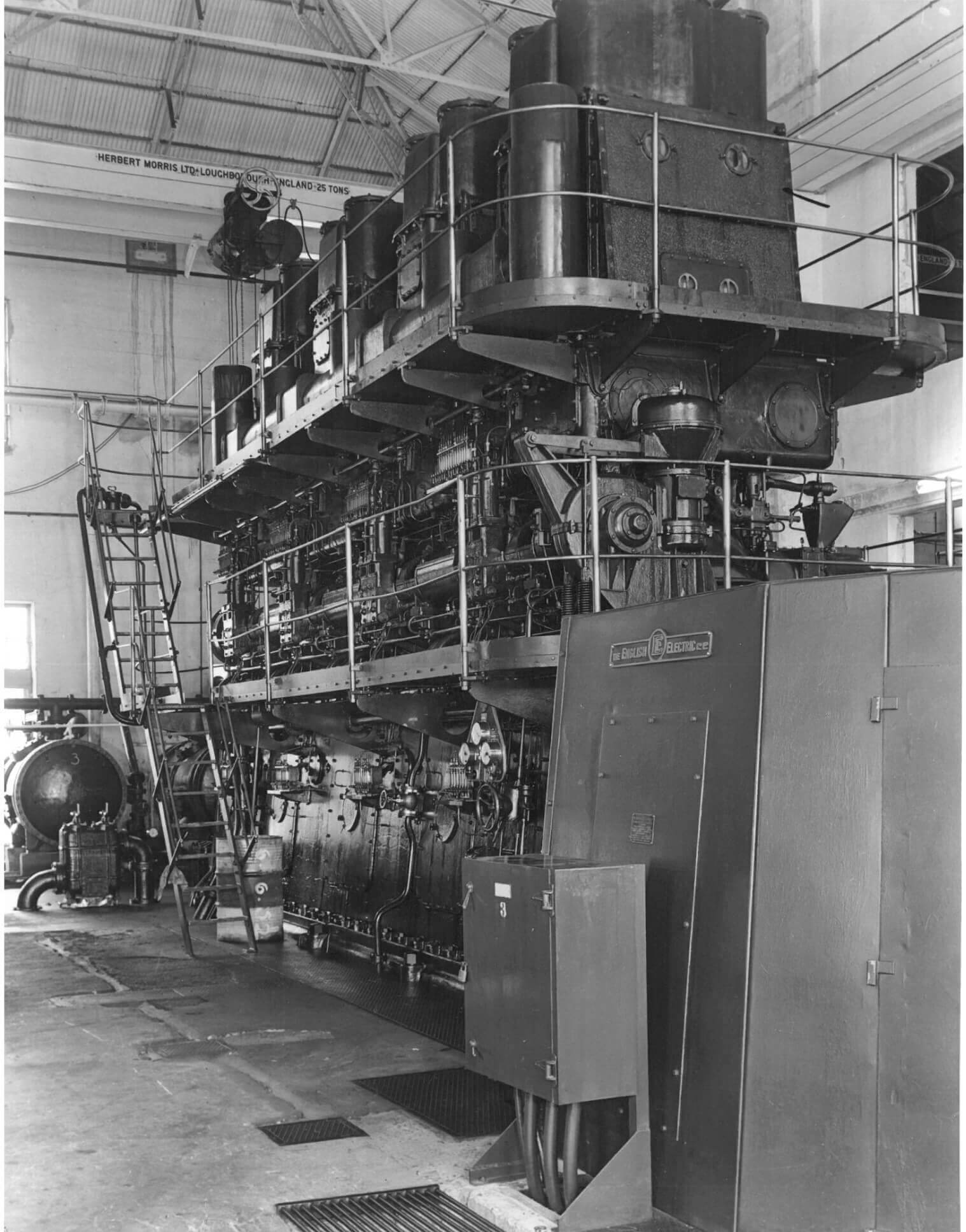
IMAGE: “Old Faithful”, an English electric air-injected diesel engine that went into service in 1931 and was still running 40 years later.
The Company continued to expand its infrastructure in the 1930s and in 1932 bought Block House as a location for the St. George’s branch from the Corporation of St. George’s. The Somerset branch, where the original BELP&T acronym is still visible on the side of the building, was opened as a showroom in 1933. One of our highlights was the laying of a sub-sea cable from Spanish Point to the Royal Naval Dockyard in 1936 – a task that required a fleet of large and small boats and a lot of manpower. A supervising engineer also arrived on island to supervise the project. Laying submarine cable was essential to ensuring electricity could be delivered throughout Bermuda.
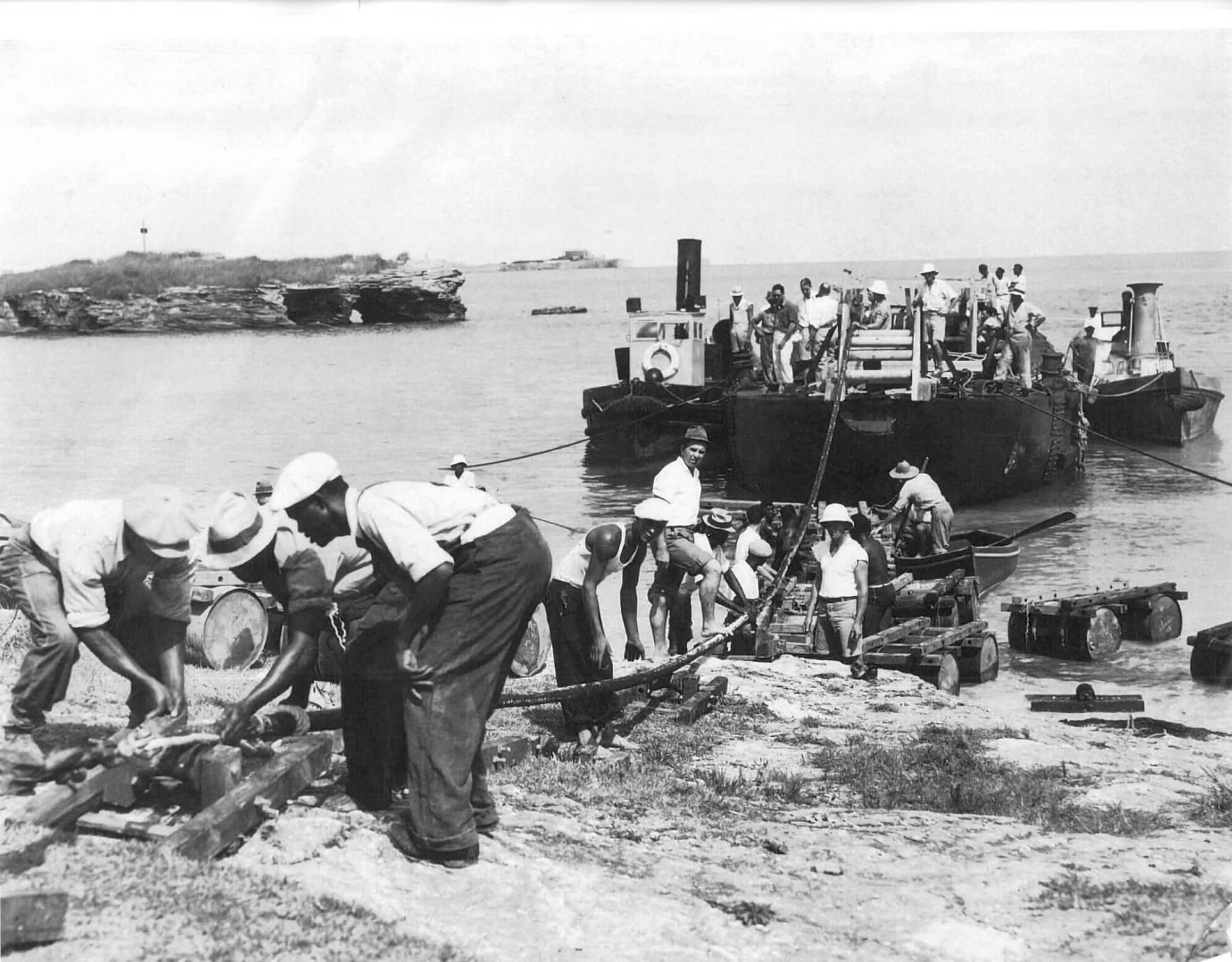
IMAGE: 1930s | Employees working at Spoanish Point, laying submarine cable. A supervising engineer was sent to Bermuda to manage the project.
In 1937 our new Head Office was completed to house management and clerical staff. The building was later converted to a training centre when a new Head Office was constructed in the 1970s. As the building had reached the end of its useful life and would be too costly to renovate, it was demolished in 2023 as part of the Asset Retirement Plan (ARP).
In the 1940s we continued to grow despite the difficulties imposed by World War II. The War meant that there was a shortage of male workers as well as the need to guard the power station against possible attack. With several bases on the island that were critical to the war effort, it was essential that we continued to supply reliable power.
Assisting Britain’s war effort was also a Company policy as outlined in our 1940 Annual report: “Most of the electrical appliances popular in this Colony are of American or Canadian manufacture, but to help Britain’s war effort, for it must be recognised that Britain is making the main war effort in this Empire of ours, special consideration is being given to ordering as many supplies as possible from England.”
As highlighted in our 1941 Annual Report, the Company’s moto during the difficult war years was: “Whatever the obstacles in our path – and there are many and serious – we shall go forward with resolute determination to make the Electric Industry as great in leadership as in technical strength; to the widest possible use of its service at the least possible cost to every class of consumer, doing our work as well as we know how, and striving always for improvement.”
In the 1940s we had been setting aside funds for the critical project of laying high voltage cables underground. In 1949 high voltage cables were laid in duplicate from our main plant in Pembroke to our substations in Warwick and Flatts. In 1950 a high voltage cable was run from the plant along Harbour Road to the Belmont substation. These cables provided, most importantly, for improved safety but also for the continued growth of the Company.
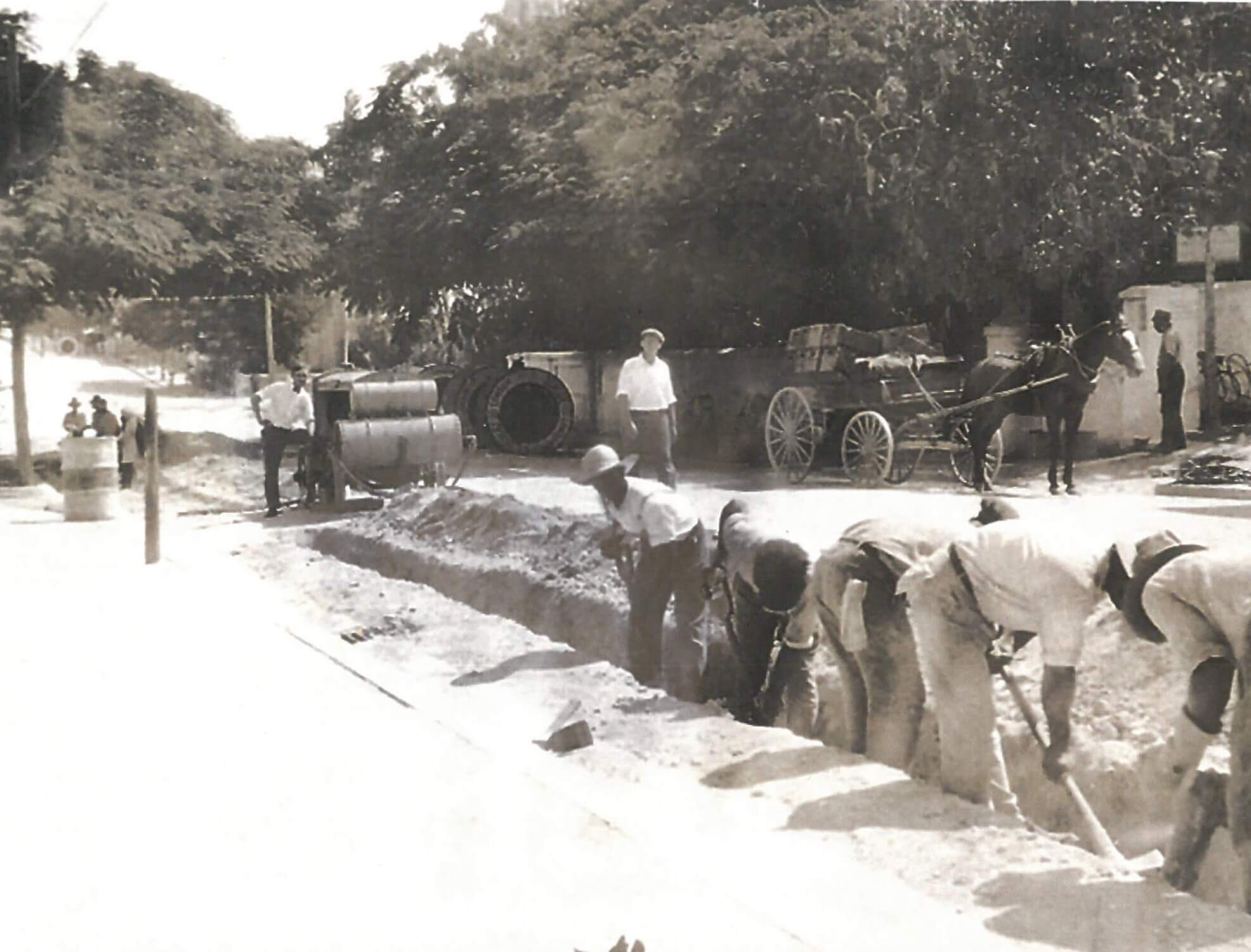
IMAGE: 1930s | B.E.L.P. & T.’s first cable dig through Victoria Street when an air compressor was used for the first time.
Over the years, as our operations expanded and more space was needed, we had been purchasing more land and by the 1950s our Serpentine Road plant consisted of 11.5 acres.
In the 1950s, we decided against developing a tramway for the island and so removed the word “Traction” from the Company’s name and became what we all know today as the Bermuda Electric Light Company Limited – BELCO.

IMAGE: Royal Gazette | February 19, 1950
IMAGE: Royal Gazette | Saturday, March 18, 1950
We embraced new technologies as we grew. By the mid-1950s three automatic bookkeeping machines and a team of 19 staff were responsible for sending out 13,000 bills every month. Approximately 18,000 meters were read by more than a dozen meter readers which included 11,273 domestic customers. In 1957 the average electricity consumption was 221 kW hours per month which was comparable to the average use in the US at the time.
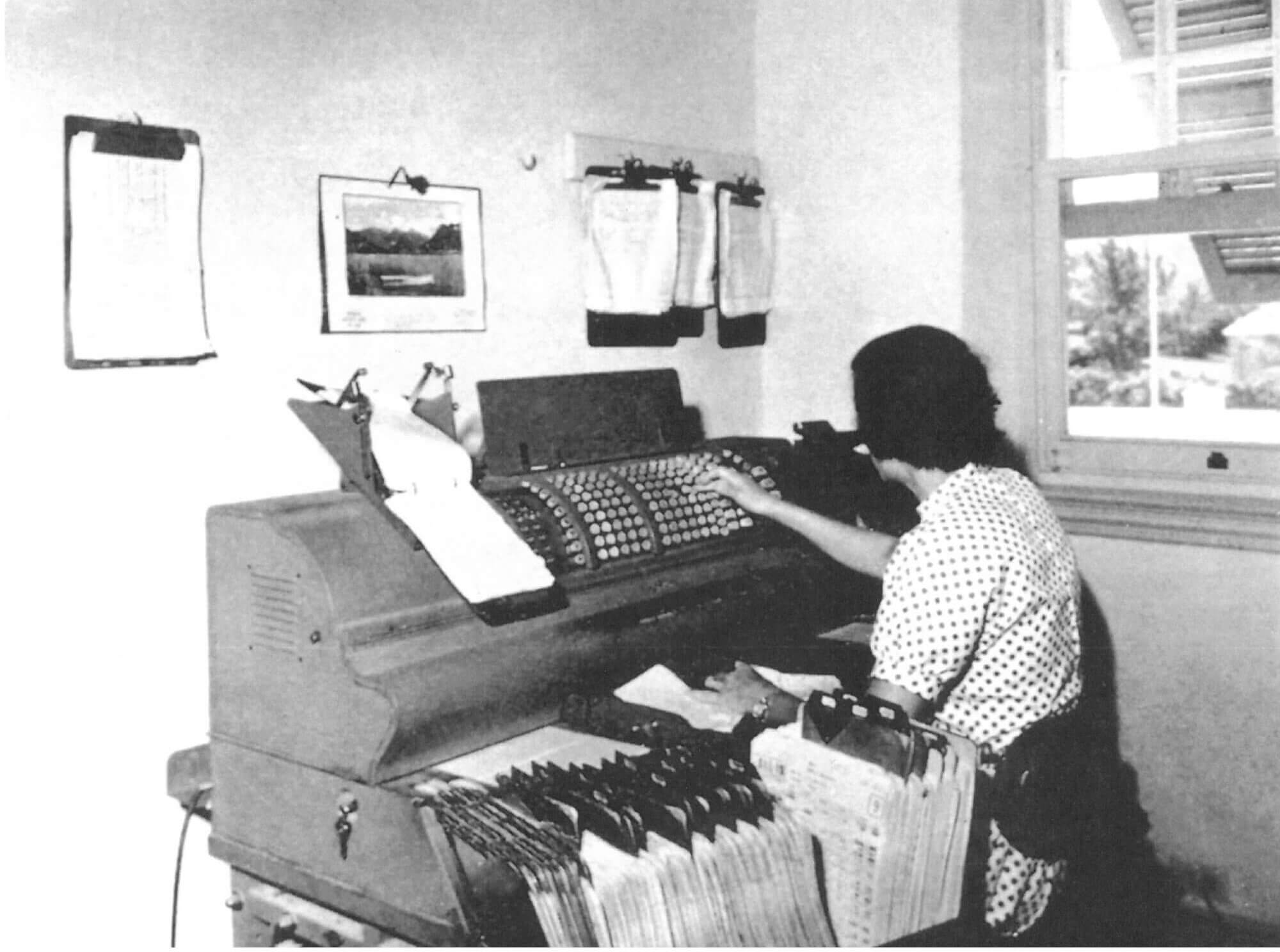
IMAGE: 1950s | Automatic Book keeping machine
From 19XX, one of our businesses was selling and servicing electric appliances to the public. In 1953 a new Hamilton appliance showroom was opened on Reid Street in the Rees Building which we had purchased as we had been given notice to vacate our previous showroom located in the Bank of Bermuda Building. The new Reid Street showroom had a theatre to accommodate 80 people for demonstrations of electric appliances. Demonstrations given at our showroom presented the advantages of different electrical appliances and the best way of using them. Meters installed in “Reddy’s Kitchen” showed real-time operating costs of using the various appliances. By 1957 there were 54 different kinds of electrical devices being used in homes. By 1960 our Consumer Engineering Department, a 16-man work force, repaired small household appliances, and provided refrigeration and air conditioning installation and service. By 1973 we moved our merchandising and repair facility to Phillips House and as other business started selling electrical appliances, we closed our retail and repair facility in the same year.

In the late 1950s we continued to build infrastructure critical to operations. In 1959 the Chicago Bridge and Iron Company constructed a 67,000-barrel steel welded tank to hold fuel on site at Serpentine Road. Shortly after completion, the Esso tanker Eurynome arrived at the Hamilton docks to offload the first shipment of fuel for the new storage tank via a dedicated underground pipe that had been laid from the docks to Serpentine Road.
Additional engines were also installed in the 1950s including a 3,000 kW Nordberg diesel generating set put into service in 1950.
By the 1960s, demand for power was rising rapidly, especially as Bermuda’s tourism industry was undergoing rapid growth. As reported in our 1961 Annual Report: “Ten years ago, in 1951, our peak load was 8,760 kW and we sold 33,737,000 kW hours (kWh) to our customers. This year our peak load was 18,600 kW and we sold 83,919,000 kWh. By 1971 we estimate our peak load will have risen to 39,000 kW with over 160,000,000 to distribute. This would be enough to run the average household for over 30,000 years or a large hotel for 55 years.”
The increasing demand for power saw the installation of a new 6,000 kW Nordberg Diesel generating unit which was put into service in December 1963 and a second unit later installed alongside it in the power station annex.
Infrastructure and plant upgrades continued apace in the 1960s including in 1966 the trenching and laying underground of duplicate 22,000 kilovolt cables and a pilot cable from Mullet Bay Substation into the town of St. George’s. In 1969 the first 22 kilovolt submarine cable was laid from Ferry Reach to the Civil Air Terminal.
In February 1969 Bermuda changed from using pounds, shillings, and pence to a Bermuda decimal currency. As outlined in the 1968 Annual Report: “…the changeover will reach into many aspects of our Company operation. Our accounting, purchasing and stores staff will be most vitally concerned, and plans are now being formulated to provide an orderly conversion of accounting machines, adding machines and the many business forms involved.” Prior to the currency change, we had installed Shilling Meters in many households which were our main source of revenue collection. The meters required a shilling coin be inserted to pay for electricity. There were many stories from individuals who attempted to foil the meter by using items such as ice or lead fishing weights shaped into coins as well as round slugs from receptacle boxes.
The 1970s continued to see growth in demand and ongoing investment in engines, infrastructure, and technology. Our new office building, which is still the main corporate office building today, was completed in April 1970 and included a staff canteen which was a great success and much appreciated by the team. The Canteen became a focal point for the Company with events and meetings held there including Christmas parties, games nights and competing for baked goods prizes at the annual Agricultural Exhibition.
Always embracing the latest technological advancements, in 1973 a computerised Intelogic Supervisory Control Desk, known as the Scada System, became the central monitoring point for all distribution substations. In 1972 the accounts department changed to a computerised system with staff trained on how to operate the punch tape machines. And in 1976 we introduced computer terminals in the cashier offices in Hamilton and Serpentine Road.
Other infrastructure upgrades included the laying of two 1,500 lengths of submarine cable laid across Ferry Reach on September 25, 1975. The cable laying involved the handling of two 11-tonne cable drums, 10 feet in diameter and 5 feet wide as well as cranes on a barge with the entire operation completed in one morning.
Engine replacements and additions also continued with our first gas turbine installed in 1970 with a second commissioned in 1971. By 1979 four smaller gas turbines had been installed on Cemetery Road. In 1976 a new Crossley Pielstick diesel engine was commissioned to meet increasing demand, the third such engine to be installed at the plant. By the end of the 1970s the first large medium speed diesel engine was installed, replacing earlier slow speed engines.
Concerning future demand for electricity, our 1977 Annual Report said: “Future load growth is extremely difficult to predict as it depends on a variety of factors including local economic activity, future policy regarding hotel expansion, commercial building construction and population growth. Energy conservation can have an effect and, of course, the maintenance of a healthy tourist industry is the keystone to the prosperity of us all.”
The 1980s was a decade of growth for Bermuda and BELCO. Our 1980 Annual Report said: “Apart from the requests for additional load from the larger commercial customers, there was a steady stream of applications from the residential sector for new and increased services. In this regard there is a noticeable trend toward the division or extension of former single residences to include one or more small apartments.” Our growth was also reflected in the construction of a new office building which connected with the older headquarters to provide an additional 17,500 square feet of space on three floors.
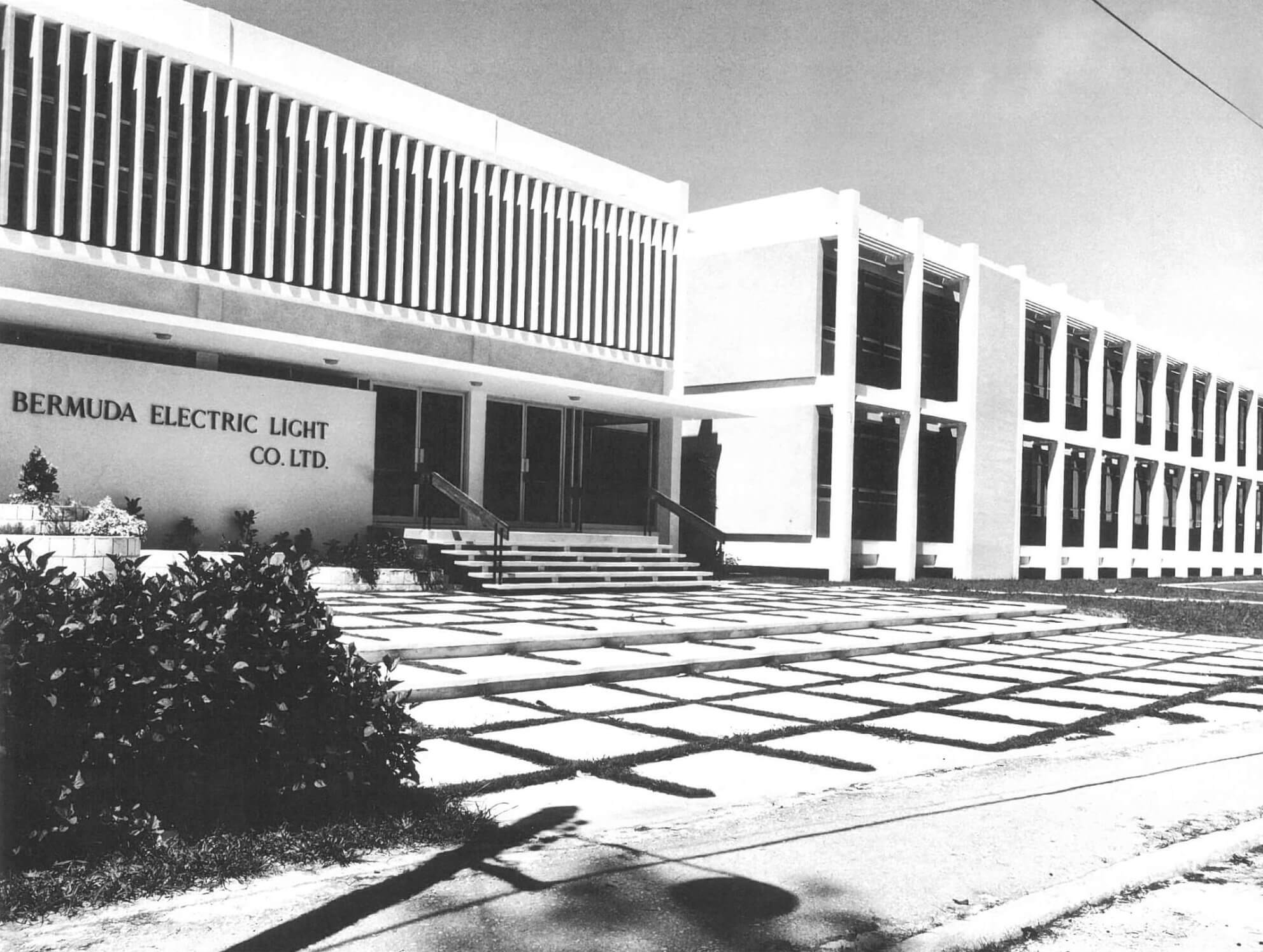
IMAGE: New office building completed in 1970.
1981 saw the beginning of a massive construction project to build the first phase of the East Power Station. The foundation of the building and the two engine bases, together with the foundation of the chimney contained 6,000 tonnes of concrete and 270 tonnes of reinforcing steel. Structural steel for the main building weighs in excess of 225 tonnes. By 1984/85 work was underway to install the Burmeister & Wain 12.5-megawatt slow speed, two-stroke crosshead diesel engines which had been built by Gotaverken Motor in Gothenberg, Sweden.
In 1984, meter readers started using a hand-held micro-computer called the Road Runner which meant that meter books were no longer needed.
September 25, 1987, will go down as the day of one of the worst hurricane’s in Bermuda’s and BELCO’s history. Early that September morning Hurricane Emily tore through the island leaving miles of downed power lines, hundreds of broken utility poles, and uprooted trees. It took almost a month to restore power to all customers during which time the Bermuda Regiment set up a command post at BELCO to coordinate the restoration efforts by moving trees and debris to clear the way for crews to make repairs. Following Hurricane Emily, large segments of the overhead distribution system were rebuilt and refurbished with new poles, lines, and pole transformers.
The end of the 1980s saw the arrival of two 10 megawatt Sulzer medium speed diesel engines for the second phase of the East Power Station that was carried out between 1988 and 1989. Roads were shut down and crowds gathered on the route to watch the huge engines inch their way from Hamilton docks to BELCO where they were installed, commissioned, and provided power for more than 30 years. In 1989 there was an official opening of the second phase of the East Power Station with manufacturers and suppliers from Poland, Switzerland, and England in attendance for the ceremony.
The 1990s saw us diversify and grow into other business including our purchase of Bermuda Gas and Utility Company in 1994. Established in 1936, Bermuda Gas was a distributor of commercial and residential propane gas and operated retail and service operations. The following year, in 1995, BELCO Holdings was established to provide a structure for diversification.
In the early 1990s the old office building, built in 1937, was remodeled into a purpose-built Training Centre for employee training and development programmes.
In 1997 we commissioned a new $2.2 million Oily Waste Treatment Facility in accordance with our commitment to continually improve our environmental performance.
In the 2000s the completion of phase three and four of the East power Station marked the end of a 20-year power plant development programme that saw the installation and commissioning of four new MAN B&W 14.5-megawatt medium speed four-stroke diesel engines as well as a second tall exhaust stack. With the completion of the East Power Station, discussions and planning for the next 20 years commenced.
An important infrastructure upgrade was the opening in May 2003 of the Eugene Cox Operations Centre which is the hub of our power generation and transmission and distribution control systems, as well as dispatch operations. During emergencies such as hurricanes, the Operations Centre serves as our situation room, enabling communications, customer service and operational employees to monitor critical systems and plan for the restoration of power.
The Operations Centre was a key asset later that year when on September 5, 2003, Hurricane Fabian battered Bermuda. One of the strongest hurricanes to ever hit the island, there was major damage to infrastructure. However, electricity supply was restored to all customers within three weeks thanks to the efforts of staff, retirees who came to help and crews dispatched to Bermuda by the Caribbean Association of Electric Utilities (CARILEC).
Less than two years after Hurricane Fabian, on July 14, 2005, a devastating switchroom fire caused an island wide blackout and a three-day power outage in the City of Hamilton. A forensic investigation revealed that the fire was caused by water ingress, or a void, possibly emanating from the time of the original installation.
In July 2006, the Phoenix Switchboard was commissioned, replacing the facilities destroyed by the 2005 fire. The new facility is a two-storey, 9,500 square foot reinforced concrete building containing low-maintenance, state of the art switchboard equipment. The building was built large enough to accommodate additional switches as the island’s demand for electricity continued to grow.
In 2009, BELCO’s peak load was reached at approximately 600 million kilowatt hours generated for the year. Since then, demand has steadily fallen due to several factors including increased uptake of residential solar, increased energy efficiency, a small local residential population, fewer hotels and other factors.
In January 2009, BELCO introduced the Cayenta Utilities Customer Information System, which allows consumers to view and pay their bills and check out their electricity consumption on the company’s website. This system has now enabled our customers to receive ebills, change to paperless billing and pay by Direct Debit.
In July 2009, BELCO Holdings Ltd. changed its name to Ascendant Group Ltd. after being approved by shareholders at its Annual General Meeting. The resolution, which was approved at the meeting held at the Bermuda Underwater Exploration Institute, aimed to better position BELCO, Bermuda Gas and PureNERGY Renewables to pursue new growth opportunities, free of any restrictions. The move for the name change was announced in a letter to shareholders by Vince Ingham, president and CEO of BELCO. It read: “The name change positions the parent company to grow through diversification in energy and infrastructure businesses. By building on our core strengths, including engineering and technical capacity, complex project management experience, and industrial and large commercial plant expertise, we can develop new business opportunities that will add value to the parent company outside of an increasingly regulated electricity business.”
Also in July 2009, The House of Assembly approved an amendment to the legislation that regulates BELCO’s prices as an interim measure, until a new Energy Commission was up and running. Finance Minister Paula Cox introduced the Price Commission Order 2009 as “the flip side” of the Energy Act, and explained that it will apply to businesses competing with BELCO or offering energy sources other than electricity.
In February 2010, we took delivery of the last of three new 45-tonne, 4.5-megawatt (MW) gas turbine generating sets as it sought to make operations more cost effective and efficient. We signed a contract with UK-based Centrax Gas Turbines plc. for manufacture and installation of the engines which replaced the ageing 2.5 MW units which were the smallest of the Company’s engines and the most costly to run.
In 2010 BELCO became certified to the ISO 14001:2015 standard for environmental management systems and has maintained the certification every year. ISO 14001:2015 is the international standard for environmental management systems. The standard provides BELCO with a framework to protect the environment and respond to changing environmental conditions in balance with socio-economic needs. BELCO’s certification to ISO 14001 reinforces the organisation’s aim of contributing to the environmental pillar of sustainability. In addition to meeting legal obligations, the standard helps BELCO to improve resource efficiency, reduce waste, and consistently manage its environmental responsibilities.
In May 2011, we were awarded planning permission to expand our central plant. Four new generators and a 213ft (65m) exhaust stack were to be built according to plans approved by the Development Applications Board. The first two generators and the stack were expected to be operational before the end of 2013, with the second phase of the project finished by 2017. However, many years of delays saw our North Power Station project completed in 2020.
In July 2011, Bermuda’s nine-year plan for a new energy policy was unveiled, as Government released the White Paper on Energy. Drafting of the long-anticipated policy document began with the creation of the Department of Energy in April 2008.
In May 2012, Ascendant subsidiary inVenture acquired a majority interest in AIRCARE which helped the Ascendant Group diversify into the air conditioning sales, installation and maintenance market.
In July 2013, we were awarded Best Performing Utility by trade association CARILEC.The 33 member Caribbean Electric Utility Corporation made its first benchmarking awards in 2012. Our award was announced at CARILEC’s Engineering and Geographic Information Systems Conference in Port of Spain, Trinidad in July.
Having endured many hurricanes during our 115+ year history, October 2014 proved especially challenging when Bermuda was hit with back-to-back hurricanes within a week, Cat 1 Fay and Cat 3 Gonzalo, which caused widespread outages across the island.
In June 2015, Bermuda Gas closed down its retail business to focus on the core business of supplying and delivering propane. The Company was later sold in XX.
Early in 2016 the government introduced the Electricity Act which updated old legislation that regulated the electricity sector and created the Bermuda Regulatory Authority which replaced the Energy Commission.
Since becoming a member of CARILEC, BELCO had regularly sent linespersons to other islands to assist in restoration following hurricanes. As an example, in September 2017, a team of BELCO linepersons went to the British Virgin Islands to work with the BVI Electric Company to restore the power grid hammered by hurricanes Irma and Maria. The Category 5 storm, which had winds of 185mph, caused widespread, devastation in the Caribbean.
In November 2017, The Regulatory Authority of Bermuda (RA) issued a notice requesting that we submit an Integrated Resource Plan proposal to the Authority. We were issued with a Transmission, Distribution and Retail license on October 27 and as part of the license, as outlined by the RA, “An Integrated Resource Plan, when approved and final, details how electricity demand will be met in the future. Consistent with Section 40 of the Electricity Act and the TD&R licence held by BELCO, the Authority has formally commenced this important phase of electricity regulation. It should be noted this is the first part of the IRP planning process.”
In March 2018, we were finally given approval to build four new generators. The RA approved our application to install four dual-fuel engines with a total power output of 56 megawatts. We also planned to build a battery energy storage system with a ten-megawatt output.
In April 2018 we announced that after 67 years of service the island’s electricity distribution grid needed a major overhaul and upgrade. As we had outlined the year before, about 25 per cent of our underground cables were more than 60 years old. An additional 15 per cent are more than 50 years old. Over the next five years, we planned to carry out a $125 million project to modernise the transmission and distribution network, including cables, substations and the installation of advanced meters.The work would help to improve the reliability and efficiency of electricity delivery, which we are responsible for under our Transmission, Distribution and Retail licence granted by the RA.
In June 2018, we contracted a consortium of Burmeister and Wain Scandinavian Contractor A/S and MAN Diesel and Turbo SE for the construction of the replacement generation at a new North Power Station (NPS) and Saft America, Inc, for the battery energy storage at the site.
Ascendant’s existing Bermudian management continued to run the company and its subsidiaries, and a new majority Bermudian board of directors was constituted which included representatives from Algonquin. Barclay Simmons, chairman of our board, said at the time: “We look forward to this new chapter and the expertise Algonquin brings in renewable energy that will ensure Bermuda is well served with reliable power generation that will be cost-effective, cleaner, and more efficient.
On December 18, 2020, BELCO suffered a rare island-wide power outage as a result of faulty equipment at the NPS. The fault caused a cascade of safety mechanisms to kick-in which shut down power to protect generating assets, but all customers were restored within 6 hours.
Work started in 2021 and continues today on upgrading our transmission and distribution infrastructure with a view to ensuring a safer, more reliable grid capable of accommodating the intermittent nature of most renewable technologies as they come online.
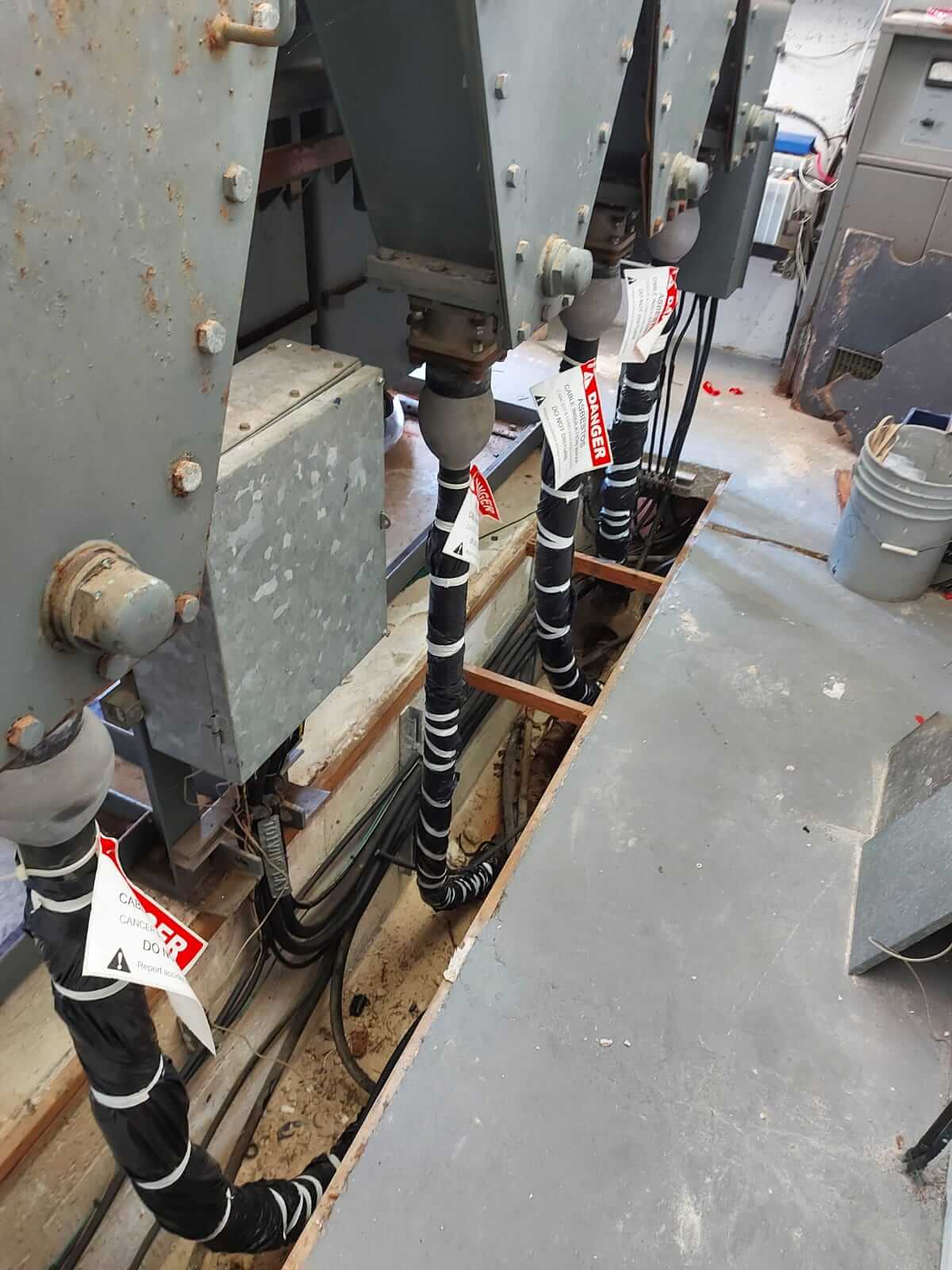
IMAGE: Somerset Sub Station 2022
Once the North Power Station was commissioned, we started our Asset Retirement Project (ARP) in September 2021. The ARP involves the removal of eight of the 16 engines, four gas turbines, five exhaust stacks and buildings that have been decommissioned. The ARP was also driven by a need to remove hazardous materials and to perform a thorough site clean-up but is ultimately driven by the future requirements of diversifying the Company’s energy generating sources.
Our asset retirement project began in 2021 and the demolition portion will reach completion within the year (2023). Additionally, our team has commenced work on the next iteration on the island’s IRP which is due to the RA in November of this year (2023).
Today, we remain committed to providing reliable, safe energy to the people of Bermuda, a task dutifully performed by a team of more than 230 staff, of which 95% are Bermudian. The Company provides power to approximately 36,000 metered connections and the Company is working toward a renewable energy future and achieving Net Zero by 2050.